Skip to content

How to Start a Swimwear Brand
From your first collection concept to samples, costs and launch planning. A practical guide for turning a swimwear idea into a production-ready project.
Starting a swimwear label means turning a creative vision into garments people love to wear, a clear technical specification our factory can execute with precision, and a launch plan your business can sustain. At MLY, we have guided independent designers and scaling brands through this process for over 20 years—this guide walks you through the exact decisions we make together before fabric hits the cutting table.
On this page
Start with a customer, not a swimsuit
A new collection becomes easier to plan when you can describe the people who will buy it. “Premium swimwear” is too broad to guide a pattern maker or a fabric decision. A clearer starting point is a customer, an occasion, and an unmet need: for example, resort customers looking for adjustable tops, swimmers prioritizing secure coverage, or families shopping for coordinated pieces.
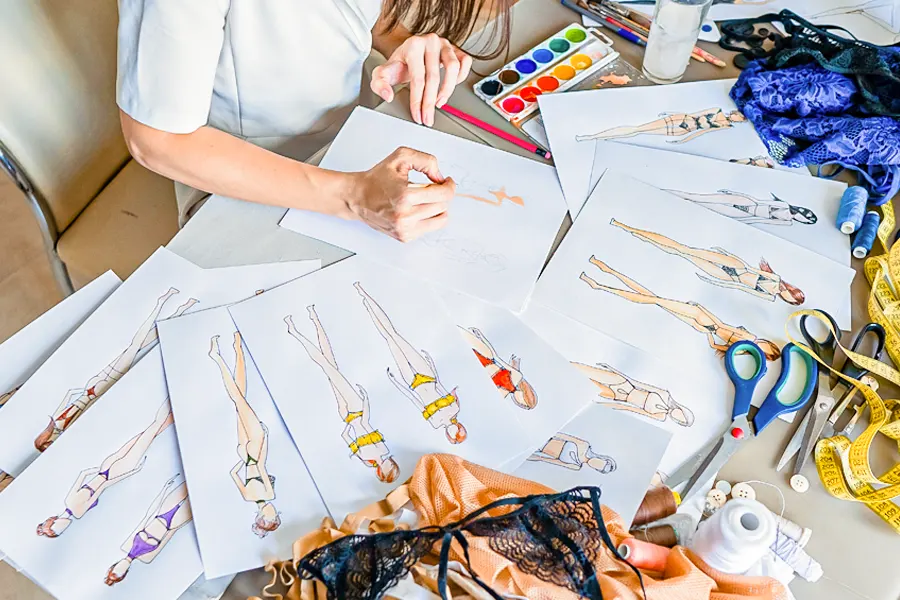
Think through where your customers will wear the garments, what they value most, their typical size needs, their expected retail price range, and how they usually discover new brands. Consider the climate, sales season and sales channel in your target market. These choices influence coverage, support, fabric, packaging, imagery and production timing.
Rather than copying several competing labels, choose a small number of relevant brands and compare their product range, size offering, fit language, customer reviews and product photography. Pay attention to recurring complaints. A positioning statement should be specific enough to influence product development, not just a sentence for a marketing campaign.
Make one decision before you move on: Who is your first collection for, what will distinguish it, and where will you sell it?
Build a focused first collection
The first assortment does not need to cover every swimsuit shape. A coherent capsule collection often gives customers more useful choices than a large range of unrelated styles. Select the pieces that support your brand positioning, then decide which silhouettes, colors and details should carry across the collection.
Give each piece a reason to exist.
Check each actual color combination.
Plan by style, color and size.
One practical way to organize the range is to separate hero pieces, which express the brand’s identity, from core pieces, which are easier to mix, match or reorder. For a bikini-focused brand, you might assess whether a triangle or bandeau top, a high-waisted or classic bottom, and a one-piece serve different customer needs. These are planning examples, not a recommended number of SKUs.
Sketch a collection matrix
| Style | Role in the collection | Color / print | Fabric and trims | Target sizes | Planned quantity |
|---|---|---|---|---|---|
| Bikini set A | Core | Solid blue | Stretch shell, lining | To define | To quote |
| One-piece B | Signature | Printed | Printed shell, lining | To define | To quote |
| Additional concept | Optional | To define | To define | To define | Sample first |
Illustration only. Set counting, fabrics and pricing must be confirmed for the specific order.
Keep each style–color combination distinct. At MLY, our standard production baseline begins at 100 pieces per order, with at least 50 pieces of one style in one color. Repeat orders follow this same accessible threshold. Within that 100-piece baseline, our cutting room can comfortably grade across up to five sizes (e.g., XS–XL), giving your collection the size inclusivity your customers need without forcing you into heavy inventory risk.
A practical note from our showroom: styles in our catalog are development references and construction benchmarks, not ready stock sitting in a warehouse. We adapt patterns, fabrics, and custom trims to your unique specifications so you launch an original, market-ready collection.
Decide how your designs will be developed
You do not need a perfect technical file before asking a manufacturer for guidance, but you do need to show what is known and what still needs development. The right starting point depends on how original your silhouettes are and how complete your specifications have become.
Start from a visual sample and identify the changes.
Share selected bases while developing signature pieces.
Work from concept drawings, measurements and a tech pack.
Begin with a reference sample
A sample or visual reference can establish a general silhouette, coverage, neckline, leg opening or construction detail. Mark the changes you want: fabric, fit, color, lining, trims or branding. A reference is a starting point for development and costing, not a promise that the same garment can be shipped without sampling.
Combine familiar shapes with original details
A collection may share a consistent base fabric or fit approach while reserving custom construction for selected statement pieces. This can simplify the design conversation, but each affected style still needs its own specification and quantity review. A shared fabric does not automatically remove development work or minimums.
Develop from a full concept or tech pack
An original design may require front and back drawings, measurements, a fit reference, fabric directions, print placement, support construction, size grading and trim specifications. Clarifying the most important functional details early reduces the risk of a sample that looks right but wears differently from the intended design.
These are flexible development routes we offer at MLY, not rigid service tiers. Our team will recommend the most cost-effective path based on your design complexity, sketches, and target launch date.
Prepare a manufacturer-ready design brief
A good brief does not have to be intimidatingly long. It simply needs to give our technical team enough clear details to quote accurately and prepare your pattern. Separate essential requirements from details you want our advice on:
| Include in your first brief | Why it matters |
|---|---|
| Product type and reference images | Establishes the intended shape and use |
| Front / back views and fit notes | Clarifies coverage, support and construction |
| Fabric, color and print direction | Helps assess materials and sourcing |
| Sizes, target customer and size chart if available | Starts the fit and grading discussion |
| Labels, logo and packaging preferences | Makes branding requirements visible |
| Proposed style–color quantities | Enables a meaningful MOQ and quotation discussion |
| Sales market and target in-hand date | Helps plan labeling, documentation and lead time |
If you already have a tech pack, share its version and identify what has been approved. If not, a clear mood board, annotated sketches, sample photos and a written list of priorities are useful conversation starters. MLY’s current private-label service describes assistance with fabrics, patterns, printing, sizing, labeling and packaging; the applicable scope is agreed for each project.
For an explanation of sample stages, fit checks and approval records, see the Sampling & Product Development guide when available, or visit MLY’s existing Sampling service.
Select materials with the end use in mind
Material choice is more than a color decision. The stretch direction, recovery, hand feel, opacity, lining, surface texture and print method all affect how a swimsuit fits and performs. Nylon–elastane and polyester–elastane blends are common categories to discuss, but fabric composition alone does not establish durability, UPF performance or a specific fit result.

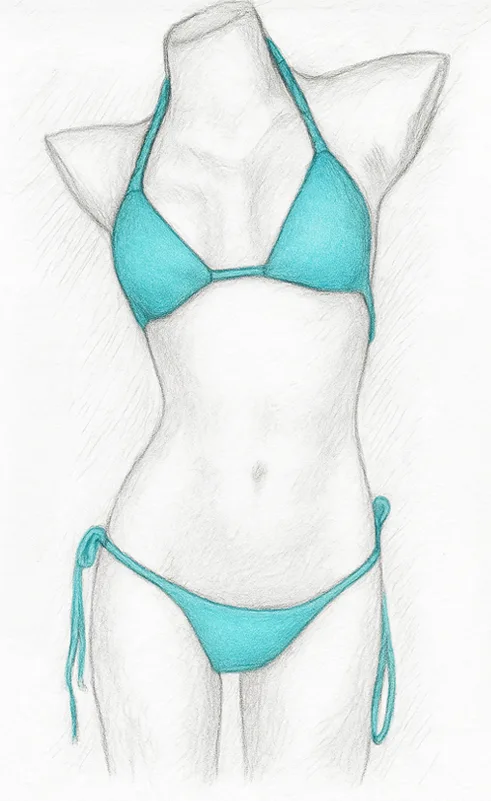
For each fabric candidate, ask for the relevant composition, weight or construction information, color options, lining pairing and sample availability. Look at how light colors behave when stretched or wet, whether textured surfaces change the fit, and whether hardware or embellishments could feel uncomfortable against the body.
If your label plans to make recycled-content, sun-protection or performance claims, specify what documentation or testing will support each claim. A material certificate does not automatically apply to every finished style. Special fabric purchase minimums may also differ from garment MOQ; these should be checked against the exact material chosen.
Plan logos, hangtags, care labels and packaging alongside the garment rather than adding them after sample approval. Certain branded components can have separate minimums, artwork needs and sourcing times. The more detail you want to customize, the more important it becomes to confirm which costs and approvals are included in the quotation.
Budget for the whole launch, not only unit cost
A factory’s quoted garment price is only one part of a brand launch budget. A realistic plan includes development, samples, production, labels and packaging, shipping, creative production, selling costs and a reserve for revisions or unexpected changes.
| Budget area | Questions to put in your plan |
|---|---|
| Development | How many samples and revisions may be required? Are separate patterns or trims needed? |
| Bulk garments | What are the quantities for each actual style and color? What is included in the unit price? |
| Branding | Which labels, hangtags, hygienic liners, packaging or custom hardware are required? |
| Transport | Which shipping method, destination charges and delivery responsibilities apply? |
| Launch | What will product photography, a website, marketing and fulfillment cost? |
Factory unit price · Production order cost · Total cash needed to launch. Comparing one with another can hide major expenses.
At MLY, our standard sample development fee starts at US$50 per style (with an additional US$50 only if major pattern modifications are requested after work is underway, plus shipping). When you move forward with bulk production of 500+ pieces, we credit your initial development fee back to your production invoice. We outline all sampling terms clearly in your initial quote so there are never surprises.
Do not use a generic online “cost to start a swimwear brand” figure as your budget. Build a bottom-up estimate from your actual assortment, scope of work, logistics and channel. A useful first comparison is the total cash needed before the first sale, not just a hypothetical gross margin on a single product.
Work backward from your launch date
The date your customer sees a product is not the same as the date production ends. Before promising a launch, identify the target in-warehouse date and work backward through transit, customs or receiving, inspection, packing, production, material preparation, sampling and design approvals.
In our workshop, our bulk production turnaround is approximately 4–8 weeks for swimwear and 5–10 weeks for yogawear and activewear, with firm schedule milestones locked in once deposit and lab-dips/strike-offs are approved. We always recommend planning backward from your launch date to allow a comfortable window for transit and customs clearance.
In our sample room, high-quality sample creation is a precision craft. Our standard turnaround is 3–7 days after style details and materials are confirmed (with our fastest rush turnaround around 3 days, excluding shipping). If your design requires custom embroidery, silicone heat transfers, or placement printing, plan for an additional 2–3 days for strike-off approvals.
A launch schedule should include decision dates as well as production stages. List who must approve the fit, print colors, price, labels and quantities. Leave time for a second review rather than building an entire campaign around the earliest possible sample date.
Review samples against your original brief
Samples are decision tools. The question is not simply whether the garment looks attractive on a mannequin, but whether it meets the brief for fit, coverage, support, comfort and construction. Try to test the sample with people and conditions that match the intended customer.

Review the neckline, underbust support, shoulder straps, waist, leg openings, lining and seam positions as appropriate to the style. Record any change against a measurement or annotated photograph. Describe the problem and the required outcome rather than sending only “make it smaller” or “make it more premium.”
Keep a simple version history: sample version → issue → requested change → revised sample → approval. Distinguish corrections of manufacturing errors from new creative decisions, since they may have different cost implications. Confirm which sample is approved before the team begins large-scale production.
Make the collection production-ready
A manufacturer can move more confidently into bulk planning when the details have stopped changing. For every style and color, confirm the approved sample reference, final fabric and lining, artwork file, trim and label specification, size chart, size quantities, packaging and any test or documentation requirements.
Agree whether quantities are counted as individual pieces or sets. This matters particularly for bikini tops and bottoms, which a brand may market together or sell separately. Confirm the terms in writing and check that the proposed combination meets both the full-order and individual style–color requirements.
Once the specification is approved, the production quotation and schedule can be finalized for the actual order. Shipping time should be planned separately, and the destination market may affect care-label, product information or test-document requirements.
What helps us quote your project accurately
A focused first inquiry helps our development team give you meaningful answers and a realistic initial quote, rather than a generic price sheet. You do not need every detail finalized before reaching out—simply let us know what is locked and what you’d like our guidance on.
Share these details where available:
- Brand or company name, target market and sales channel.
- Product types and reference images or drawings.
- Number of planned styles and colors.
- Target sizes and estimated quantities for each style–color combination.
- Fabric, lining, printing and customization preferences.
- Logo, labeling and packaging requirements.
- Target in-hand date and shipping destination.
- Questions about samples, revisions, documentation or pricing.
Copy a concise list of the information to gather before contacting MLY.
Our workshop supports full-service private-label development across swimwear, resort wear, and activewear. Whether you start with a reference garment, rough sketch, or complete tech pack, our team will walk you through every step of sampling and production. Browse our product references for inspiration, or start a conversation with our team today.
Frequently asked questions
How much does it cost to start a swimwear brand?
The budget depends on the size of your collection, fabric choices, development and sampling work, branding components, production quantities, shipping and how you plan to sell. Build the estimate from each cost category rather than relying on a universal startup figure. Request a quote based on specific style–color quantities and an identified production scope.
How many styles and colors should my first collection include?
There is no single rigid formula. Start with pieces that serve distinct customer needs, then align them with production economics. At MLY, our standard threshold is 100 pieces per order and 50 pieces per style–color combination, giving you the flexibility to launch with 2 styles in 1 color or 1 style across 2 colorways.
Can I begin without a complete tech pack?
You can begin a discussion with references, sketches, photos and a description of your desired fit, fabrics and branding. A more complete tech pack makes costing, sampling and approvals easier. Specific development tasks and charges should be established for your design rather than assumed to be included in a catalog reference.
How should I decide my size quantities?
Use your target customer, intended market, product fit and any reliable prior sales data. Discuss the size range and ratio before bulk approval; do not copy a generic distribution from another brand. Clearly indicate whether quantities refer to separate garments or sets.
How early should I contact a swimwear manufacturer before launch?
We recommend contacting us 3 to 4 months before your target launch. While our bulk swimwear production runs 4–8 weeks, allowing adequate time upfront for pattern development, lab-dip approvals, fit revisions, and international freight ensures a calm, confident product debut.
Turn your idea into a clear project brief
You do not need every answer before you begin. A well-organized first collection, honest quantity estimates and a clear list of outstanding decisions make development more productive. Bring those details to MLY, and discuss which design, sampling, material and production steps fit your project.
Keep exploring: Private Label Services · Browse Product References · Sampling & Development
Prefer to reach MLY directly? Use the contact page.