Skip to content

The swimwear industry is becoming increasingly competitive. Brands are under pressure to launch new collections faster, maintain consistent quality, control production costs, and meet growing sustainability expectations. Traditional manual cutting methods often struggle to keep pace with these demands, especially when dealing with stretch fabrics that require precision and stability.
Automated cutting technologies have transformed modern swimwear manufacturing by improving cutting accuracy, reducing material waste, increasing production speed, and supporting scalable production. For manufacturers and private-label swimwear brands, investing in advanced cutting solutions can significantly improve efficiency while ensuring every garment meets quality expectations.
This article explores the key automated cutting technologies used in swimwear production and how they contribute to better productivity, improved fit, and reduced waste.
What Is Automated Cutting in Swimwear Manufacturing?
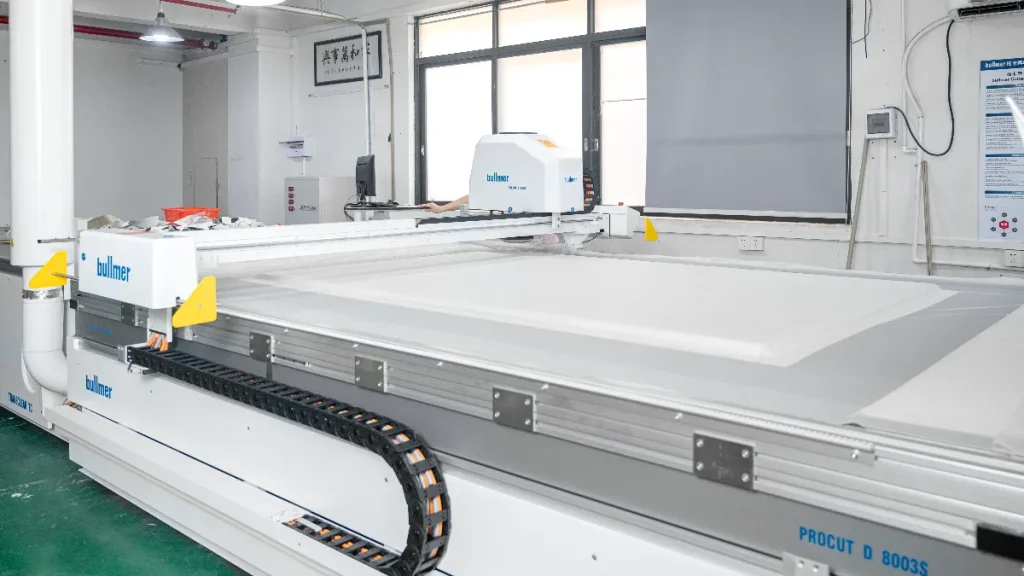
Automated cutting replaces manual shears with computer-controlled hardware, delivering the precise, tension-free cuts required to maintain fit and yield in high-stretch swimwear fabrics.
Automated cutting refers to the use of computer-controlled cutting equipment to process fabric according to digital patterns and production markers. Instead of relying on manual spreading, marking, and cutting, automated systems perform these operations with minimal human intervention.
In swimwear manufacturing, automated cutting systems typically work together with CAD (Computer-Aided Design) software and marker-making programs. Designers create digital patterns, which are then arranged efficiently to maximize fabric utilization. The cutting machine follows these digital instructions and cuts the fabric with exceptional precision.
The technology is particularly valuable for swimwear because the fabrics used—such as nylon-spandex, polyester-spandex, recycled stretch fabrics, and performance compression materials—are highly elastic and sensitive to distortion. Even small cutting inaccuracies can affect seam alignment, fit consistency, and garment appearance.
Key advantages of automated cutting include:
- Consistent cutting accuracy across production runs
- Faster production cycles
- Reduced labor dependency
- Lower fabric consumption
- Better scalability for large orders
- Improved quality control
For the swimwear manufacturer producing thousands of pieces per month, automated cutting often becomes one of the most important contributors to operational efficiency.
Types of Automated Cutting Machines for Stretch Fabrics
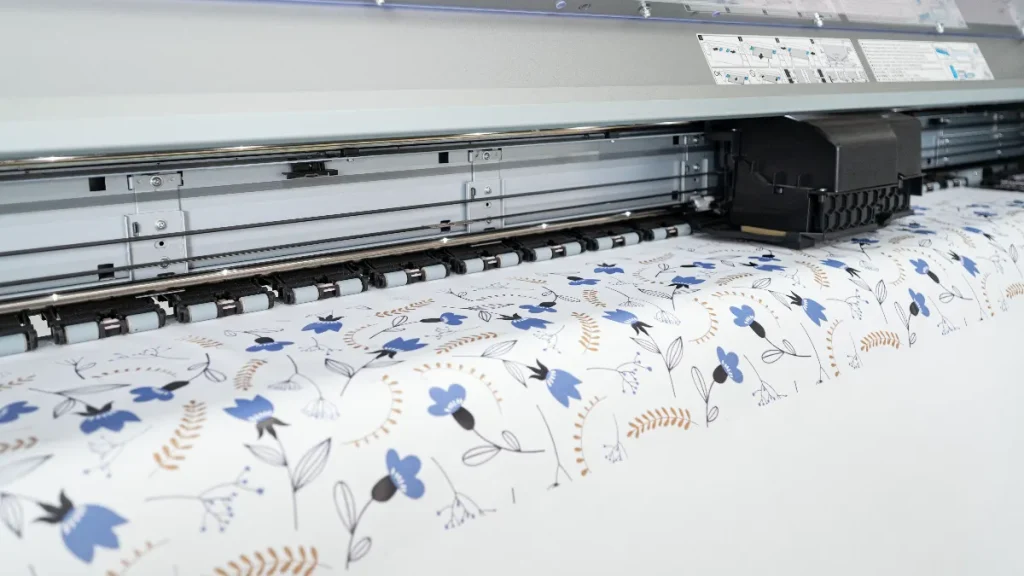
Automated cutters range from high-volume CNC knives to non-contact lasers, each engineered to control distortion, lock in dimensional accuracy, and manage edge quality on highly elastic fabrics.
CNC Knife Cutting Machines
Computer Numerical Control (CNC) knife cutters are among the most common solutions used in swimwear factories. These systems utilize oscillating, reciprocating, or rotary blades controlled by digital software. The machine follows exact pattern coordinates and can cut multiple fabric layers simultaneously.
- Single-layer systems: Use adjustable vacuum hold-down to stabilize thin stretch fabrics without over-stretching, making them ideal for complex curves like bikini cups.
- Multi-ply capacity: Process compressed fabric stacks up to 80mm thick to serve high-volume, repetitive swimwear production.
- Industrial tooling: Feature automatic lubrication and sharpening to maintain clean, drag-free edges on synthetic knits.
- Software integration: Link directly with CAD software for tight marker nesting, minimizing material waste on expensive spandex blends.
Digital Fabric Cutting Plotters
Flatbed digital plotters provide the flexibility required for fast style changes, prototype development, and mid-scale production runs. Operators can swap between oscillating blades, drag knives, and tangential heads specifically tuned for performance knits and Lycra.
- Material-specific parameters: Machine software allows operators to adjust cutting speed, knife frequency, and downforce to prevent pulling highly elastic materials.
- Optical recognition: Built-in camera systems detect printed markers automatically, ensuring exact cut-path alignment for sublimation-printed swimwear.
Laser Cutting Systems
Laser cutters use focused thermal energy instead of physical blades. Operating as a completely non-contact process, they eliminate mechanical drag and prevent fabric distortion entirely during the cutting cycle.
- Edge sealing: CO2 lasers melt and seal the edges of synthetic blends like polyester and nylon, preventing fraying on raw-edge designs.
- High-speed detailing: Galvo laser setups process fine perforations, mesh-like patterns, and intricate branding motifs at high speeds.
- Thermal management: Operators must carefully tune power and speed parameters to avoid thermal damage, edge stiffening, or discoloration on delicate stretch fabrics.
Waterjet Cutting Machines
Waterjet systems shoot a pure, high-pressure water stream to cut textiles without introducing any heat into the material. The non-contact force of the water avoids mechanical distortion while protecting the physical properties of the knit.
- Material integrity: Preserves the natural elasticity and soft hand of the fabric without creating hardened, melted edges.
- Moisture management: Requires effective drying protocols to prevent water absorption and mold in thin knitted fabrics after cutting.
Automated Die-Cutting Systems
Unlike digital flatbeds, automated die-cutting uses steel rule dies and mechanical presses—either pneumatic or hydraulic—to punch through thick stacks of material in a single motion.
- High-volume efficiency: Delivers fast cycle times and lower per-unit costs for bulk manufacturing.
- Standardized production: Highly efficient for producing repetitive, standardized swimwear components like foam cups, straps, and elastic tape segments.
- Tooling limitations: Lacks the design flexibility of digital cutters. Every new shape or size requires custom physical tooling, making it unsuitable for quick-turn fashion runs.
How Automated Equipment Improves Swimwear Production Efficiency
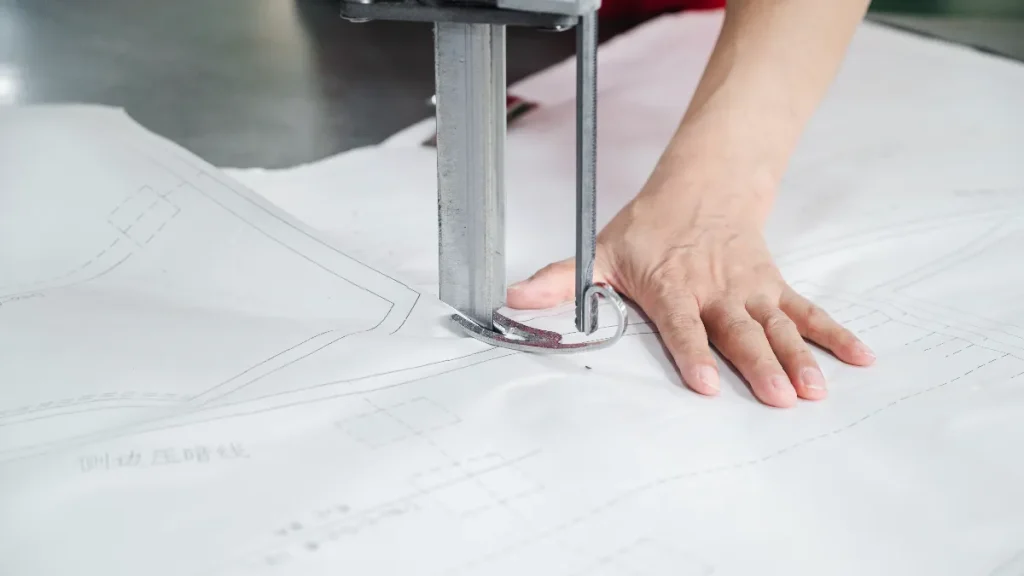
Automated cutting delivers the best results when it is integrated into a complete production workflow. In swimwear manufacturing, precise cutting must be matched with efficient sewing, binding, and finishing processes to maintain consistency from fabric preparation to final inspection.
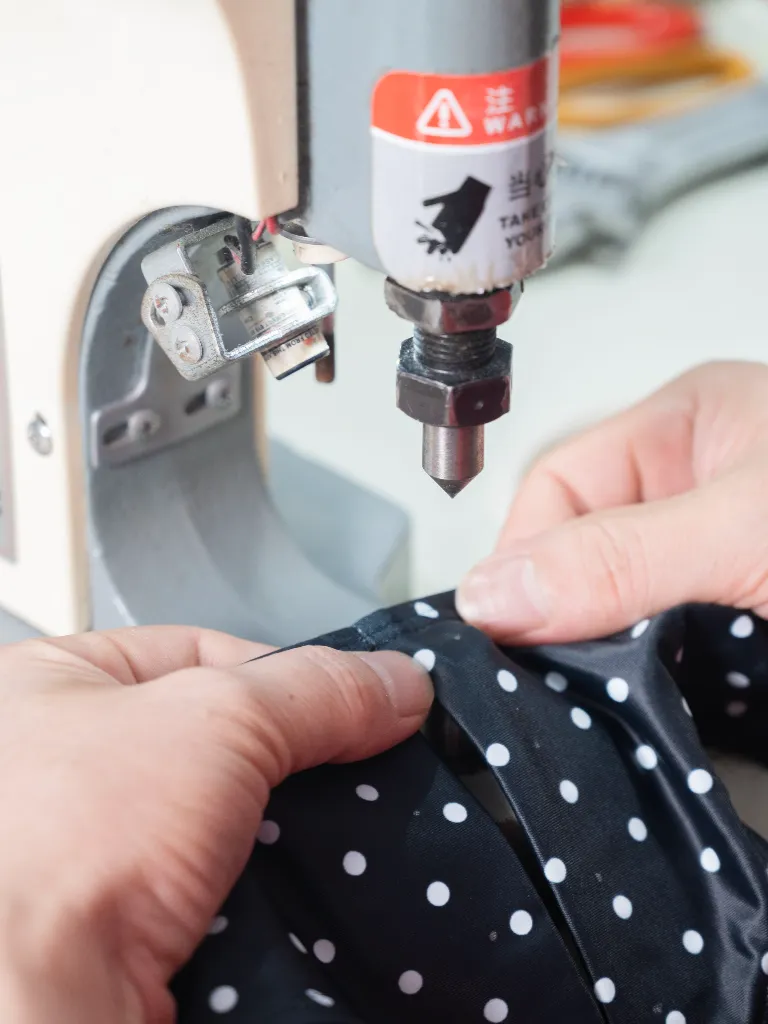
At MLY Apparel, automated cutting technology is supported by a modern production line equipped with computerized cutting systems and specialized sewing machinery designed for stretch fabrics. This integrated setup helps improve both production efficiency and garment quality.
Key equipment includes:
- Computerized cutting machines for accurate pattern execution and material optimization
- 3N5T Flatlock machines for durable and flexible seam construction
- 4N6T Flatlock machines for high-performance stretch seams and activewear applications
- Lockstitch sewing machines for precise assembly operations
- Coverstitch machines for clean hems and professional finishing
- Overlock machines for secure edge finishing and seam durability
- Elastic tape attaching machines for consistent waistband, strap, and edge applications
For brands requiring OEM, ODM, or private-label swimwear manufacturing, a well-equipped production facility can provide greater flexibility when handling multiple styles, seasonal collections, and large-volume orders without compromising quality. If you are looking for a reliable swimwear manufacturing partner, feel free to contact our team to discuss your next collection or custom project.
Premium Custom Bikinis Built For Your Brand

Marker Optimization Technologies for Reducing Waste
Marker optimization blends digital pattern engineering and AI to push fabric utilization toward 100%, turning potential scrap into usable components for swimwear production.
CAD Auto-Nesting and Constraint-Aware Placement
Digital marker making dictates the financial viability of a production run. By analyzing pattern geometry, production teams map out the most cost-effective cutting strategy before unrolling a single yard of fabric.
- Modern CAD systems evaluate piece shapes and automatically rearrange layouts to minimize spacing and edge waste.
- Constraint rules enforce strict orientation limits to align swimwear knits with two-way or four-way stretch directions.
- Blending multiple sizes (e.g., nesting S, M, and L together) in a single marker establishes a baseline efficiency target of 85%.
Treating the marker as a dynamic puzzle rather than a static template guarantees higher yields on expensive technical fabrics.
AI-Driven Marker Generation
Standard algorithms eventually hit performance ceilings. We integrate artificial intelligence to push past these limits, handling specific constraints that would take technicians hours to map manually.
- Metaheuristics, such as genetic algorithms, test millions of layout configurations to find the absolute minimum fabric length.
- AI algorithms process complex engineered prints, calculating exact offsets to match floral motifs or geometric repeats.
- Fast inference capabilities allow factories to run overnight batch optimization for high-SKU swimwear programs.
Offloading heavy computation to AI allows production planners to execute complex, multi-style markers without delaying the cutting floor.
Zero-Waste Pattern Engineering
True material efficiency starts in the design phase. We co-develop patterns and markers simultaneously to eliminate negative space entirely.
- Designers and marker technicians collaborate to adjust pattern shapes so they tessellate perfectly with zero negative space.
- AI suggests micro-modifications to seam placements and edge curves that improve nesting density without altering fit.
- Applying zero-waste principles to multi-panel suits and modular designs pushes fabric utilization from 85% toward 95–100%.
Shifting the focus from downstream waste management to upstream pattern architecture fundamentally changes the cost structure of a collection.
Remnant Utilization and Small Component Integration
Even highly optimized markers generate small voids. We capture these residual spaces by treating secondary garment components as strategic filler material.
- Nesting software establishes a hierarchy, placing large panels first and automatically inserting small parts into the remaining voids.
- Standardizing strap and binding widths ensures leftover strips easily fit into residual spaces within the main marker.
- Factories collect inevitable edge slivers for recycling or upcycling into small accessories, tracking offcut volumes to measure continuous improvement.
Closing the loop on scrap materials maximizes the output of every roll and builds a verifiable track record of sustainable manufacturing.
Fabric Relaxation and Accuracy in Swimwear Cutting
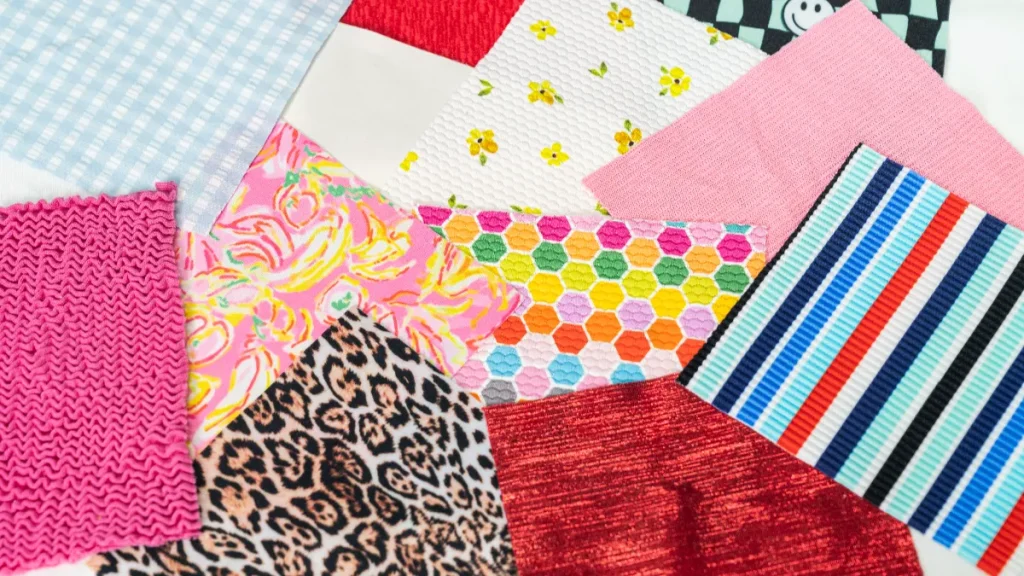
Automated precision means nothing if swimwear fabric isn’t relaxed. Releasing internal stress before cutting prevents unpredictable shrinkage, ensuring consistent sizing and exact panel alignment.
Why Swimwear Fabrics Require Pre-Cut Relaxation
Knitting, dyeing, and tight roll packing introduce severe internal stress to elastane-blended swimwear fabrics. When tension releases, the material naturally shrinks. Cutting unrelaxed material results in unpredictable shrinkage, twisted side seams, and mismatched panels after the garment reaches the sewing or finishing stages. The high precision of CNC knife and laser cutters is completely negated if the underlying fabric lacks dimensional stability. You cut a perfect digital pattern, but the physical fabric distorts hours later.
Manual vs. Automated Relaxation Methods
Traditional lay-flat relaxation requires unrolling the fabric and letting it rest for a minimum of 24 to 72 hours, depending on the elastane content. This manual process takes up massive amounts of floor space. It also risks inconsistent tension between stacked layers, as workers often pull or drag the material by hand during setup. Automated relaxing machines solve this bottleneck. These systems use zero-tension sensors, continuous plaiting, and controlled airflow to release stress consistently. They prepare stable, tension-free feeds for the cutting table without the multi-day wait.
Directional Stretch and Environmental Controls
Warp-knit synthetic fabrics exhibit different relaxation rates in length (warp) versus width (weft). This differential directly affects body circumference and vertical fit. Factories must strictly regulate the climate around the fabric to prevent dimensional shifts.
- Temperature: Stable room environment maintained at 20–24 °C.
- Humidity: Controlled moisture levels between 50–65%.
- Consistency: Identical conditions across relaxation, spreading, and cutting rooms to avoid re-tensioning.
Calibrating CAD and Spreading Systems for Accuracy
Initial shrinkage tests establish directional relaxation curves for specific fabric lots before mass production begins. Once measured, CAD patterns and markers incorporate dimensional offsets to compensate for the residual shrinkage recorded during lab validation. Automated spreading machines must then operate at minimal tension. They incorporate programmed pauses, letting layered stacks settle and breathe before the CNC cutting initiates. This process syncs digital adjustments directly with physical fabric handling.
Productivity and ROI of Automated Cutting Systems
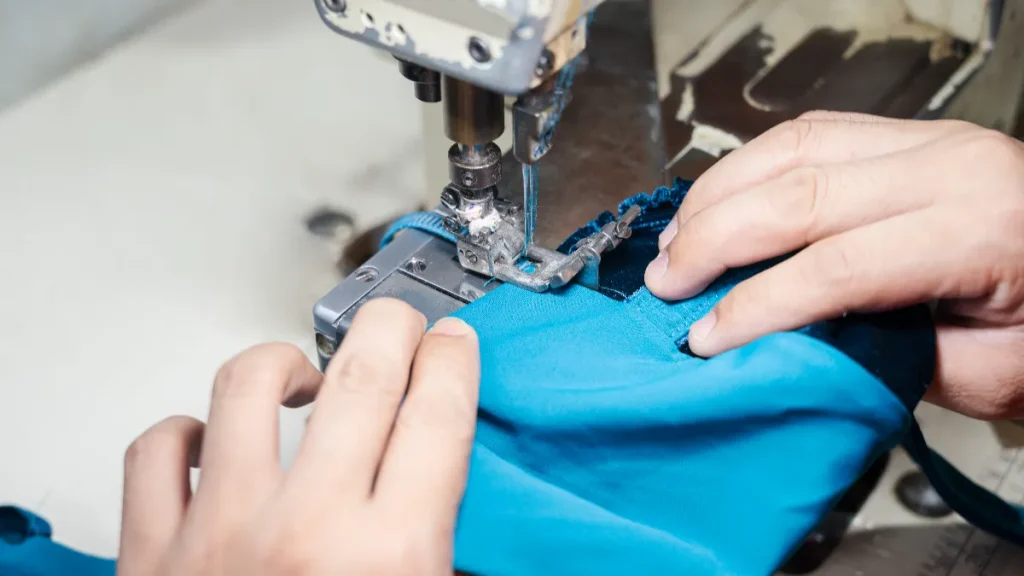
Automated cutting systems reduce production time and labor by up to 75% while improving fabric yield, driving a standard return on investment within two years.
| Efficiency Metric | Operational Impact |
|---|---|
| Production Time | Up to 75% reduction from manual methods |
| Hourly Throughput | 300 to 600 swimwear sets processed per hour |
| Fabric Yield | 1% to 2% annual improvement via nesting |
| Labor Requirements | 75% reduction (1-2 operators replacing 3-6 person teams) |
| Expected ROI | Approximately 2 years |
Throughput and Lead Time Reduction
Transitioning from manual to automated cutting directly attacks factory bottlenecks. Removing hand-cutting constraints reduces total production time by up to 75%. Modern CNC automatic cutters work at high sustained speeds, easily processing 300 to 600 swimwear sets per hour depending on the complexity of the marker and layer count.
This raw speed transforms how factories handle production schedules. Faster cutting cycles shrink bulk order windows by 30 to 50%. Brands improve their response times for seasonal drops, allowing them to finalize designs later and react immediately to incoming retail demand.
Material Utilization and Fabric Savings
Swimwear production relies heavily on expensive, technical stretch materials where every inch matters. Advanced nesting algorithms constantly analyze marker layouts and consistently improve fabric yield by 1 to 2% annually compared to manual marker making.
The software calculates tight packing configurations for highly curved swimwear pieces and automates roll planning to minimize end-of-roll waste. Saving high-cost stretch fabrics translates directly to tens of thousands of dollars retained each year, turning cutting room efficiency into pure profit margin.
Labor Optimization in the Cutting Room
Automated systems fundamentally restructure cutting room payroll and operations. They reduce cutting labor requirements by up to 75%, routinely replacing traditional three to six-person manual cutting teams with just one or two machine operators.
Lower manual dependency cuts direct operational costs instantly. Rather than paying skilled workers to perform repetitive cutting tasks, factories reassign them to critical value-added operations. Teams shift focus to quality control, sample development, and managing intricate print alignment, elevating the overall quality of the output.
ROI Timeline and Cost Justification
Capital expenditure for CNC cutting systems carries a highly predictable financial return. Garment manufacturers typically achieve a full return on investment within approximately two years when transitioning to fully automated systems.
Medium to large factories producing over 200,000 units annually justify the upfront costs quickly through the combined force of labor reduction and material efficiencies. Smaller brands also secure a strong payback timeline. By producing high-margin premium swimwear or managing diverse style portfolios with short runs, smaller operators offset machine costs through agility and reduced fabric waste.
How Automation Improves Seam Accuracy and Fit
Automated systems eliminate manual drift using exact digital patterns and tension control. This guarantees perfectly matched panels, precise curves, and reliable fit consistency across production runs.
Digital Pattern Control and Cutting Precision
Manual cutting inherently introduces variability, especially when operators trace small, curved patterns. Automated systems bypass this by translating CAD/CAM data directly to the cutting head. The machine cuts garment pieces straight from the digital file, completely eliminating knife drift and human error.
This digital link matters most for intricate components like gussets, neck bindings, and bra cups. By holding precise dimensions along tight radii, the cutter maintains exact seam allowances. Accurate allowances prevent fabric puckering during sewing and ensure panels align perfectly at every stitch point.
Managing Stretch Fabric and Reducing Shift
High-stretch materials like nylon-spandex move easily. When cut manually, pulling and shifting cause the fabric to distort. Once cut, the tension releases, and the panel shrinks or changes shape, ruining the intended geometry.
Automated cutting systems solve this tension problem directly on the table. They deploy vacuum hold-down systems and conveyor stabilization to lock the material in place. The fabric lies perfectly flat under controlled tension while the blade moves. This stabilization prevents the panels from relaxing and warping after offloading, guaranteeing pieces match exactly during assembly.
Ensuring Size Consistency and Reliable Grading
Fit consistency breaks down when grade rules get lost in translation on the cutting floor. Automation ensures every size progression executes exactly as programmed in the CAD software. The cutter applies the digital grade rules without deviation, wiping out manual interpretation errors across the entire size run.
This exactness holds true across multiple production batches and reorders. The machine replicates the original specification every single time. It also produces perfectly mirrored left and right pieces. Symmetrical cutting prevents the final garment from twisting, pulling unevenly, or riding up on the body.
Aligning Prints, Elastics, and Trims
A tight-fitting garment relies heavily on how elastics wrap around armholes, necklines, and leg openings. Automated systems cleanly cut elastic channels, facing pieces, and binding strips to exact widths. When the binding matches the pattern perfectly, operators can distribute tension evenly, creating comfortable edges that hold their shape.
The technology also handles visual alignment. For sublimation patterns, color-blocking, and repeating motifs, the cutter uses registration marks to lock the cut path to the printed design. This aligns graphics precisely across seam lines, delivering high-end visual symmetry without sacrificing the functional fit of the panels.
How to Integrate Automated Cutting into Your Factory Workflow
Successful integration of automated cutting requires aligning digital CAD workflows with physical factory layouts and upskilling your workforce to handle stretch fabrics precisely.
Conduct a Baseline Assessment and Choose Equipment
Before buying machinery, you need a clear picture of your current cutting operations. Start by mapping your existing workflow to identify bottlenecks and establish a baseline for your integration strategy.
- Workflow Mapping: Document daily volume, SKU variations, and common defect types like misaligned prints in your current process.
- Baseline KPIs: Quantify your cutting capacity, fabric scrap percentage, and average time per marker.
- Equipment Selection: Choose technology based on fabric stretch requirements, using single-ply CNC for placement prints or multi-ply cutters for high-volume solid colors.
Capturing this hard data upfront prevents you from overspending on capacity you do not need and ensures the selected hardware matches your actual production reality.
Redesign Your Digital Workflow and Factory Layout
Hardware alone will not fix an inefficient floor plan. You need to adapt both your software pipeline and your physical space to keep materials moving rapidly through the facility.
- CAD/CAM Integration: Deploy software to handle pattern grading and marker making specifically optimized for stretch fabrics and shrinkage rates.
- Physical Layout: Plan a straight-line flow that minimizes cross-traffic between the fabric warehouse, spreading tables, cutting machines, and sewing lines.
- Staging Zones: Establish dedicated areas with clear visual management labels for uninspected rolls, approved fabrics, and cut-piece bundles.
A clean, unidirectional flow prevents pile-ups and keeps your expensive cutters running constantly rather than waiting for material delivery.
Implement New Quality Controls and Data Tracking
Automation removes manual cutting drift, but it introduces new operational variables. You must establish strict controls around fabric handling and machine parameters to maintain dimensional accuracy.
- Standard Operating Procedures: Create strict SOPs for fabric relaxation times, spreading tension limits, and specific cutter blade speeds.
- In-Line QA: Introduce quality assurance checks to verify print alignment, internal notch positions, and accurate size deviations immediately after cutting.
- System Integration: Connect the automated cutter to your ERP or MES for real-time tracking of fabric consumption, inventory control, and order traceability.
Tracking this data in real time gives your management team direct visibility into true production costs and material yield improvements.
Train Your Workforce and Execute a Phased Rollout
Swapping shears for CNC machines changes the required skill set on your floor. Your existing team knows the fabric best, so focus on transitioning their expertise into technical machine management.
- Workforce Upskilling: Train your staff to handle CAD pattern engineering, machine setup, and preventive maintenance instead of manual cutting tasks.
- Pilot Phase: Launch a 3-to-6-month test using a limited set of high-volume styles to refine marker strategies and spreading rules.
- Data-Driven Expansion: Gradually scale production while continuously reviewing data on fabric utilization and operator errors to adjust machine settings.
Taking a measured, data-backed approach to integration ensures your production quality remains stable while the team adapts to the new hardware capabilities.
Final Thoughts
As swimwear brands continue to demand faster lead times, better fit accuracy, and more sustainable production practices, automated cutting systems provide a practical solution for meeting these expectations. Manufacturers that successfully integrate these technologies into their workflow are better positioned to control costs, increase output, and deliver high-quality swimwear products at scale.
At MLY Apparel, we combine advanced automated cutting systems with modern sewing equipment, experienced production teams, and strict quality management to support OEM, ODM, and private-label swimwear projects. From product development and sampling to bulk production and custom branding, we help brands bring high-quality swimwear collections to market efficiently and reliably.
Looking for a trusted swimwear manufacturer for your next collection? Contact MLY Apparel today to discuss your designs, request samples, or explore customized production solutions tailored to your brand’s needs.
Frequently Asked Questions
Is automation worth the investment for swimwear cutting?
For operations handling medium to high volumes with recurring styles, automation pays off quickly. It directly tackles the challenges of stretch fabrics by improving fit consistency, lowering defect rates, and maximizing the use of expensive materials. Very small bespoke setups might start with CAD and outsourced cutting before committing to in-house hardware.
What specific cutting equipment do I need?
A standard automated production cell includes fabric tensioning spreaders, precision cutting machines (either CNC knives or CO2 lasers), and CAD software with nesting capabilities. Operations working with printed swimwear will also require high-resolution vision systems to perfectly align contour cuts with sublimated graphics.
How does automated cutting impact fabric waste?
Precision systems significantly lower scrap rates by using algorithmic nesting to pack pattern pieces tightly across the fabric roll. Along with a narrow cutting kerf and fewer human errors, factories typically see improved fabric utilization of about 2%, saving substantial costs on premium nylon and elastane blends.
How fast do these automated systems operate?
While top linear speeds hit 60 to 120 meters per minute, the real advantage lies in multi-layer capability. A standard machine cuts through 10 to 40 layers of stretch fabric in 5 to 15 minutes. This continuous operation outputs thousands of pieces per shift, far outpacing manual cutting limits.
What ROI timeline is typical for a swimwear factory?
Facilities generally achieve a complete return on investment within two to three years. The financial payback stems from a 50% to 75% drop in cutting room labor costs, minimized material waste, and the ability to process orders up to four times faster without adding extra shifts.