Skip to content

Choosing one piece vs two piece often comes down to support, coverage, and how the suit moves. This quick guide gives you a clear, practical comparison so you can match silhouette to activity, comfort, and confidence.
This guide covers Support and Coverage Differences, Flexibility and Activity Considerations, and Style and Travel Friendliness, helping swimsuit shoppers choose the right fit, minimize adjustments, and pack smarter for trips.
Support and Coverage Differences
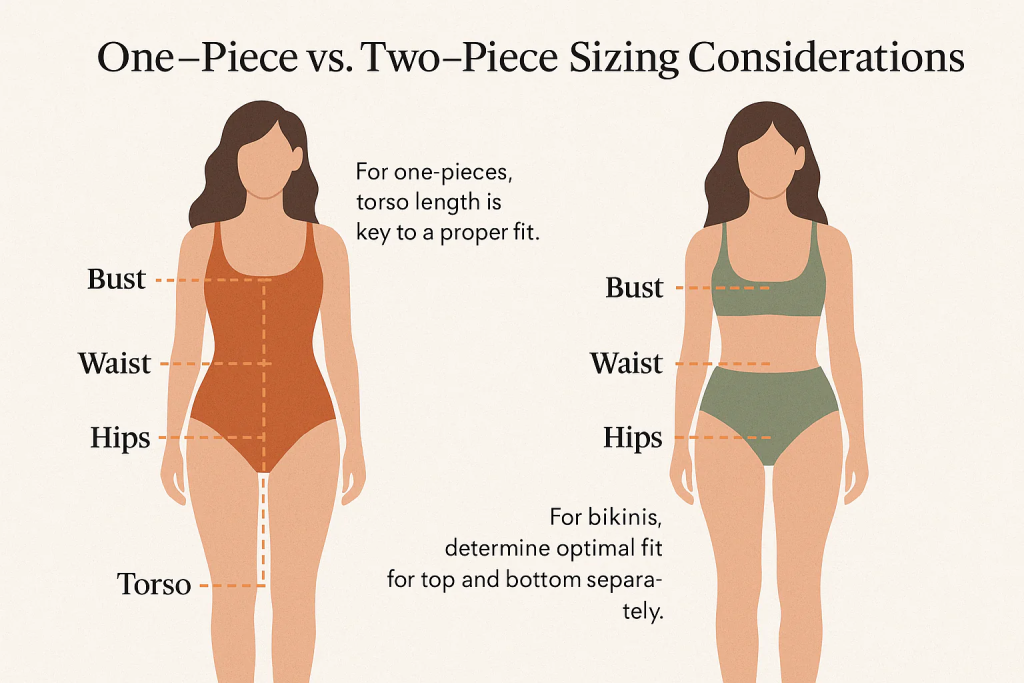
One-piece swimsuits generally offer greater support and fuller coverage compared to two-piece swimsuits, making them preferred for high-impact activities and modesty, while two-piece suits provide more flexibility, less coverage, and easier bathroom access.
In our experience, shoppers compare one piece vs two piece by coverage, support, and practicality.
Coverage and Support Comparison
| Aspect | One-piece | Two-piece | Notes |
|---|---|---|---|
| Coverage Area | Full torso; midsection covered 80–100% | Exposed midriff; coverage 40–60% | Choose for modesty or sun coverage |
| Bust Support | High support; shelf bras + compression panels | Variable; ties and removable cups | Premium sets may add underwire/compression |
| Waist & Back Coverage | Waist 100%; back 70–100% | Waist 0%; back 10–60% | Pair with rashguard for added back coverage |
| Movement Security | High security; less shifting in motion | May shift more during vigorous activity | Suited for training and water sports |
| Bathroom Convenience | Requires full removal | Bottoms remove independently | Faster between swim sessions |
Practical Benefits and Use Cases
- One-piece suits excel in competitive swimming, water aerobics, and high-impact sports thanks to a secure fit and full torso coverage.
- Two-piece suits favor style, tanning, and convenience with flexible mix-and-match options and easier restroom access.
- One-piece designs appeal to shoppers prioritizing modesty or extra sun protection across the torso.
- Two-piece sets offer fashion versatility but typically less built-in bust support and can shift during intense movement.
Flexibility and Activity Considerations
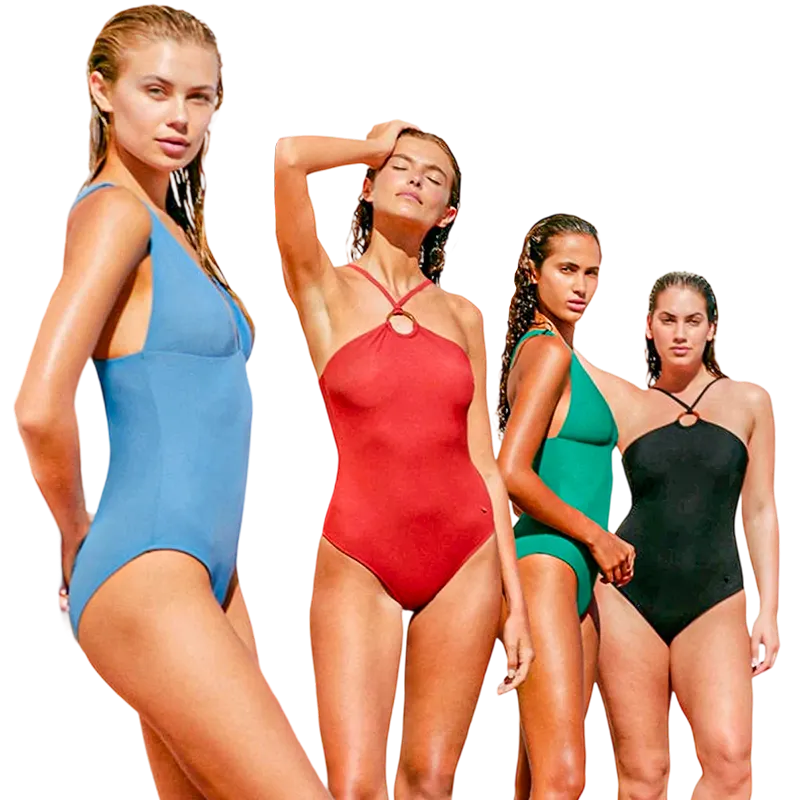
One-piece swimsuits generally offer greater flexibility for high-movement activities like lap swimming and competitive sports, providing secure fit and support. Two-piece swimsuits grant more freedom for casual swimming and beach activities with less fabric restriction but may require adjustments during vigorous use.
In our experience, the one piece vs two piece decision comes down to how much support you need during motion and how often you want to adjust your suit between sets or activities.
Range of Motion and Support
Both styles can move with the body, but construction choices change how secure they feel in sprints, dives, and turns.
| Criteria | One-piece | Two-piece | Takeaway |
| Range of motion | Secure stretch with shoulder coverage; minimal shifting in flips and turns | Flexible torso; may lift or rotate in sprints without sport-grade bands | Choose compressive patterns for high-movement sets |
| Support | Often includes shelf bras or compression panels for bust control | Varies widely; sports bikinis, fashion styles for support | Match support level to impact and bust size |
| Fit security in high impact | One-piece linkage reduces slippage and separation during dives | One-piece for maximal security; a sport bikini if designed for impact | One-piece for maximal security; sport bikini if designed for impact |
| Adjustability | Fewer quick adjustments once on | Easy to tweak straps or swap top/bottom sizes | Two-piece wins for fit fine-tuning between drills |
Activity Suitability and Comfort
Pick the silhouette that supports your plan for the pool, surf, or sand, and how long you will wear it between breaks.
| Activity | Recommended Style | Comfort Notes |
| Lap swimming | One-piece (racerback or cross-back) | Stable for sets; slower dry time vs two-piece |
| Water polo / diving | One-piece (lockdown fit) | Maximum coverage and anti-shift security |
| Water aerobics / triathlon | One-piece (compression panels) | A two-piece may need readjustments after wipeouts; a one-piece adds coverage |
| Surfing | Two-piece (secure sport top) or long-sleeve one-piece | Two-piece may need readjustments after wipeouts; one-piece adds coverage |
| Beach volleyball | Two-piece (compressive top + drawcord bottoms) | Freedom to jump and dive; check anti-slip bands |
| Recreational swim / sunbathing | Recreational swim/sunbathing | Faster drying; easy strap and coverage tweaks |
- One-pieces tend to dry slower and can feel restrictive across shoulders and torso during multi-hour wear.
- Two-pieces dry faster, allow quick adjustments, and offer more freedom, but may need frequent readjusting during vigorous play.
In our experience, brands get the best results when we align silhouette, support architecture, and fabric spec to the activity plan—whether that is a secure one-piece for competition or a sport-grade two-piece for surf and beach play.
Reasons to Partner with MLY Apparel
- End-to-end production: fabric development to worldwide shipping for reliable timelines.
- OEM, ODM, and Private Label options to match your launch model.
- Advanced swim fabrics: chlorine-resistant, UV-safe, quick-dry for travel-ready collections.
- Custom branding: Pantone-matched colors, premium logos, and trims that elevate your line.
- Quality and responsibility aligned with global standards for long-term brand trust.
Bring Your Swimwear Vision to Life with Expert Customization
Partner with MLY Apparel to create high-quality, on-trend bikinis tailored to your brand’s unique style and sustainable values. Enjoy seamless production from design to delivery with flexible solutions built for every business model.

FAQs
Which for big bust?
Both one-piece and two-piece can work if the support is engineered right. In our experience, prioritize structure over style names when comparing one piece vs two piece.
- Underwire or molded-cup support for lift and stability.
- Wide, adjustable straps and a firm back band for weight distribution.
- Higher necklines or wrap fronts to reduce spill and increase coverage.
- Longline bikini tops or one-pieces with internal shelf bras for anchored support.
- Tie-back or hook-back closures allow micro fit-tuning throughout the day.
- Skip string triangles or ultra-thin straps if you want all-day comfort.
If you’re a brand, we can build these features into both styles with reinforced elastics and performance lining.
Which hides belly?
One-piece vs two-piece both offer flattering belly coverage with the right design. Choose silhouette and fabric that smooth, not squeeze.
- One-piece with ruching or draped overlays to visually smooth the midsection.
- Color-blocking and angled panels to create a cinched waist effect.
- High-waisted bottoms or tankinis for modular coverage without full one-piece commitment.
- Power-mesh lining for gentle shaping and hold.
- Darker mid panels with lighter sides can carve a curvier profile.
- Ultra-thin fabrics without lining can highlight, not hide.
Athletic swimming?
For lap swimming or surf, one-piece suits with secure backs excel. A sports-bra style two-piece can also work if it locks in place.
- Racerback or cross-back straps to prevent slipping during strokes.
- Firm leg openings and band elastics to stop ride-up.
- Double lining for opacity and reduced drag.
- Performance fabrics that keep stretch and shape in pool and ocean.
- Avoid heavy hardware or ties that can loosen mid-swim.
- For brands, we engineer patterns for compression, recovery, and ergonomic movement.
Comfort differences?
Comfort depends on support, adjustability, and how you move. Here’s a quick one-piece vs two-piece view.
| Aspect | One-Piece | Two-Piece |
| Support | Stable, whole-torso anchor | Strong with bra-like tops |
| Adjustability | Limited micro-tuning | Tie/clip backs and straps |
| Coverage | Full torso coverage | Mix modest or cheeky |
| Bathroom breaks | More effort | Quick on/off |
| Fit flexibility | One size across torso | Different top/bottom sizes |
| Versatility | Doubles as bodysuit | Mix-and-match looks |
In our experience, select the build that solves your main need first, then refine style details.
Travel-friendly?
Two-piece sets pack small and layer into more outfits. One-pieces work as bodysuits with shorts or skirts.
- Mix-and-match tops and bottoms to expand outfits without extra bulk.
- Quick-dry, sand-shedding fabrics keep your bag light.
- Minimal hardware to pass through security and stay comfy on flights.
- One neutral suit plus a bold print cover-up covers pool and dinner.
- Wet cotton cover-ups add weight; pick performance knits instead.
Brands and retailers: we offer OEM, ODM, and Private Label with sustainable options like recycled nylon to build travel-ready collections.
Conclusion: Selecting Based on Function and Fit
By leveraging an activity‑first fit map and prioritizing support, coverage, and adjustability, you match one‑piece and two‑piece silhouettes to real use. One‑pieces bring secure, whole‑torso control for laps, diving, and modesty goals. Sport‑grade two‑pieces add modular sizing, quicker dry times, and easier breaks for casual days and sand sports. Lock consistency with technical choices: 15–25% elastane for recovery, flatlock or bonded seams to reduce chafe, reinforced straps and stable underbust bands, plus built‑in bras where needed.
Brands that apply this lens cut returns, lift satisfaction, and protect margin through better fit and fewer mid‑season fixes. Align specs with audience and brand position, then build assortments by activity tier—performance, hybrid, leisure. A reliable manufacturing partner can simplify sampling and scale with low MOQs, precise pattern engineering, and certified quick‑dry, chlorine‑resistant fabrics.