सामग्री को छोड़ दें

Choosing the best fabrics for swimwear manufacturing is one of the most important decisions for creating a successful swimwear collection. The right swimwear fabric determines not only the comfort and appearance of a swimsuit but also its durability, stretch recovery, क्लोरीन प्रतिरोध, and long-term performance.
From fashion bikinis and resort wear to professional training suits, different product categories require different material solutions. Nylon-spandex blends offer a soft, premium feel for style-focused collections, while polyester-based fabrics provide superior color retention and chlorine resistance for high-performance swimwear.
For brands working with experienced स्विमवीयर निर्माता, understanding fabric composition, जीएसएम, खिंचाव अनुपात, and testing standards helps reduce production risks and improve product quality. This guide explores the most commonly used swimwear materials, नायलॉन सहित, पॉलिएस्टर, recycled fabrics, and compression textiles, helping you select the ideal fabric for your next collection.
What Makes a Fabric Ideal for Swimwear?
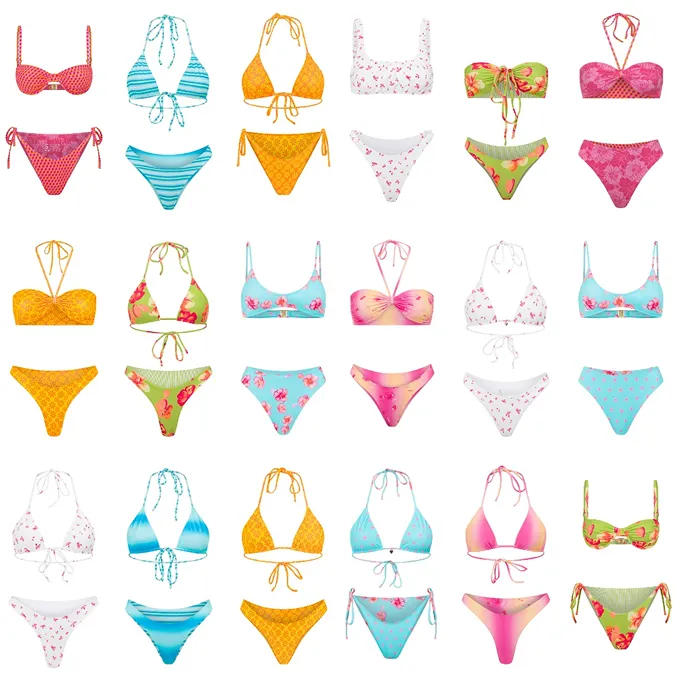
The best swimwear fabrics combine high stretch, chemical resistance, low water absorption, and mechanical durability to survive harsh aquatic environments while maintaining a संपूर्ण योग्य.
Exceptional Stretch and Shape Recovery
तैराकी पोशाक must move with the wearer without losing its underlying structure. Achieving a second-skin fit requires a precise balance of raw materials and knitting techniques.
- Multi-directional stretch: Requires 2-way or 4-way stretch for a body-contouring fit and full range of motion.
- Elastane composition: Relies on blending base fibers with 10–25% elastane (spandex or Lycra).
- आकार प्रतिधारण: Must return to its original size after stretching without sagging at high-stress areas like the seat or bust.
- Structural stability: Utilizes dense knit structures, such as warp knits, to maintain stability and prevent distortion when fully saturated.
High Resistance to Chlorine, नमक, and UV Rays
Aquatic environments are incredibly harsh on textiles. Chemical and environmental exposure will quickly destroy standard apparel fabrics, making specialized resistance mandatory for commercial swimwear production.
- Chlorine defense: Needs to withstand chlorinated pool water, which actively degrades standard elastane and fades dyes over time.
- Saltwater endurance: Must handle repeated saltwater exposure without stiffening, degrading, or discoloring.
- Sunlight stability: Requires UV stability to prevent structural fiber breakdown and color loss during prolonged sun exposure.
- Protective additives: Often incorporates specialized chlorine-resistant spandex variants or UV-protective finishes to extend garment life.
Quick-Drying Properties and Low Water Absorption
A swimsuit that holds water becomes heavy, uncomfortable, and prone to dragging on the body. Fabric engineers solve this by avoiding natural fibers and focusing strictly on performance synthetics.
- नमी प्रबंधन: Relies on hydrophobic synthetic fibers like polyester and nylon, which absorb significantly less water than natural fibers.
- Weight control: Minimizes fabric weight gain, preventing the garment from pulling downward or losing its structured fit when wet.
- Thermal comfort: Ensures rapid drying times to improve wearer comfort and reduce chilling when transitioning from water to land.
Long-Term Durability and Colorfastness
Swimwear faces intense physical wear, from scraping against concrete pool decks to sitting on sandy beaches. The material must resist surface damage while locking in color pigments.
- Abrasion resistance: Demands high mechanical durability to survive constant friction against sand, concrete pool edges, and seating surfaces.
- Surface integrity: Utilizes tight knit constructions and high-quality filament yarns to resist surface pilling.
- Dye fixation: Requires robust dye systems, such as disperse dyes for polyester, to ensure vibrant colors do not bleed or dull after chemical and light exposure.
Best Nylon Fabrics for High-Performance Swimwear
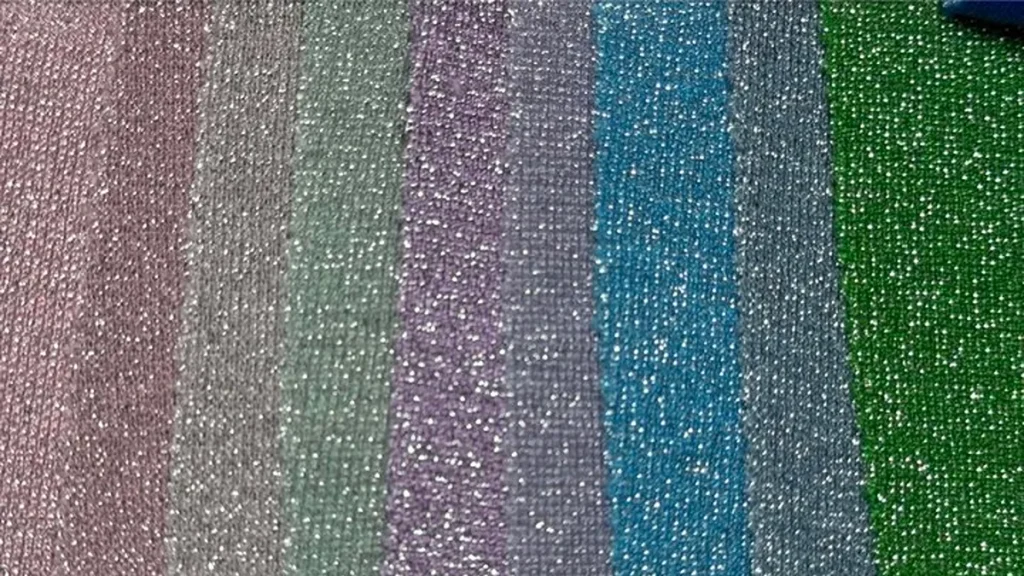
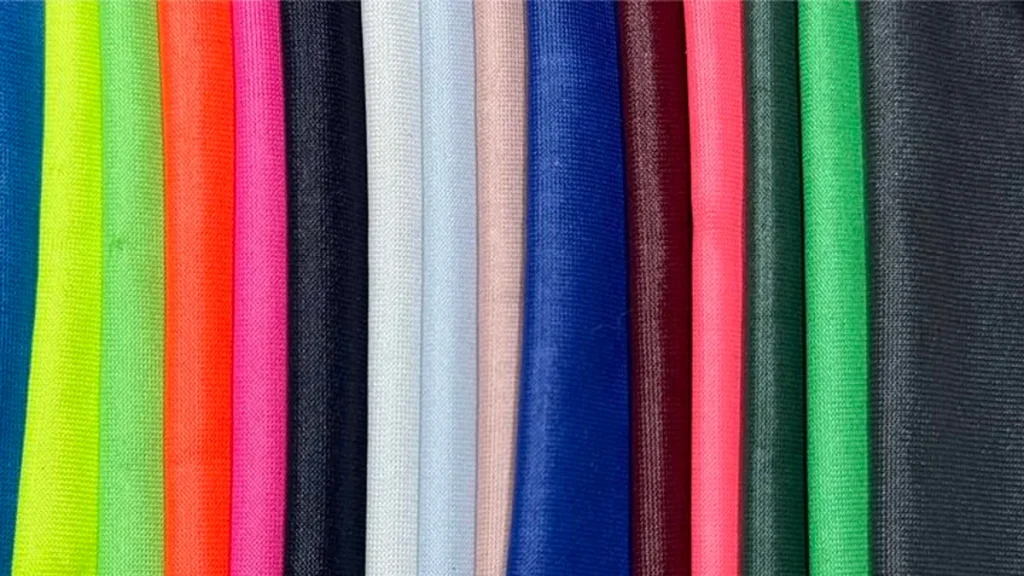
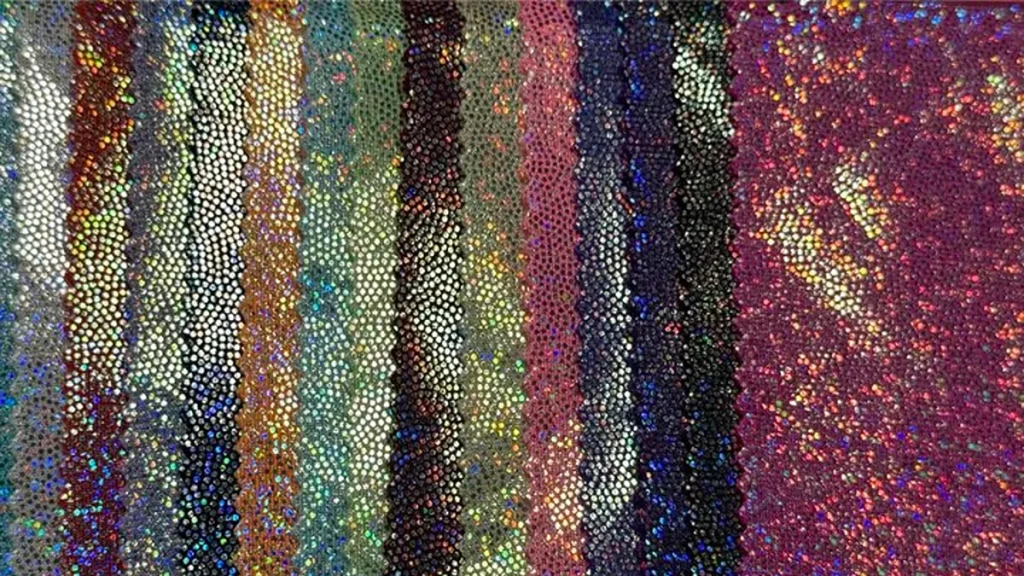
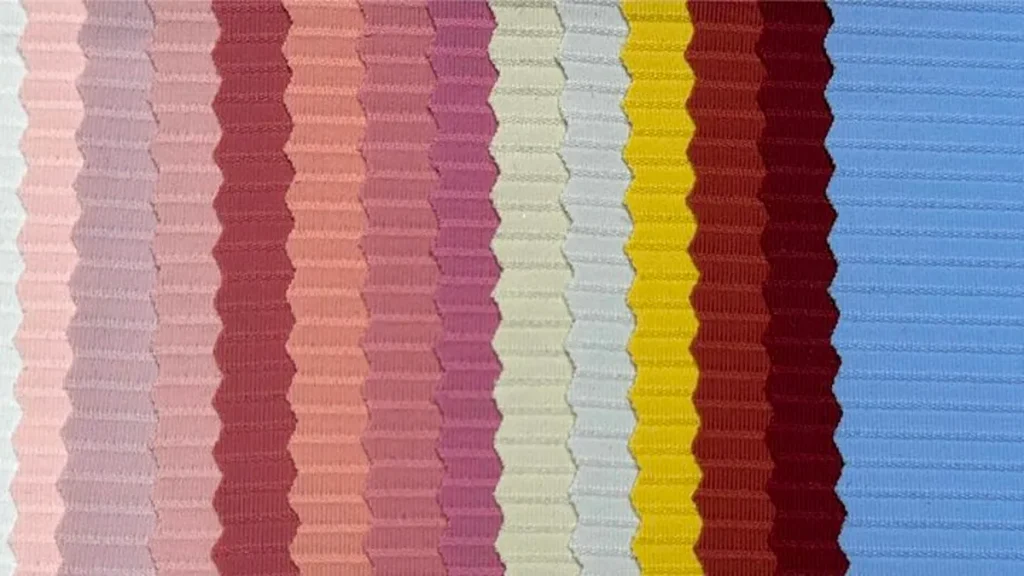
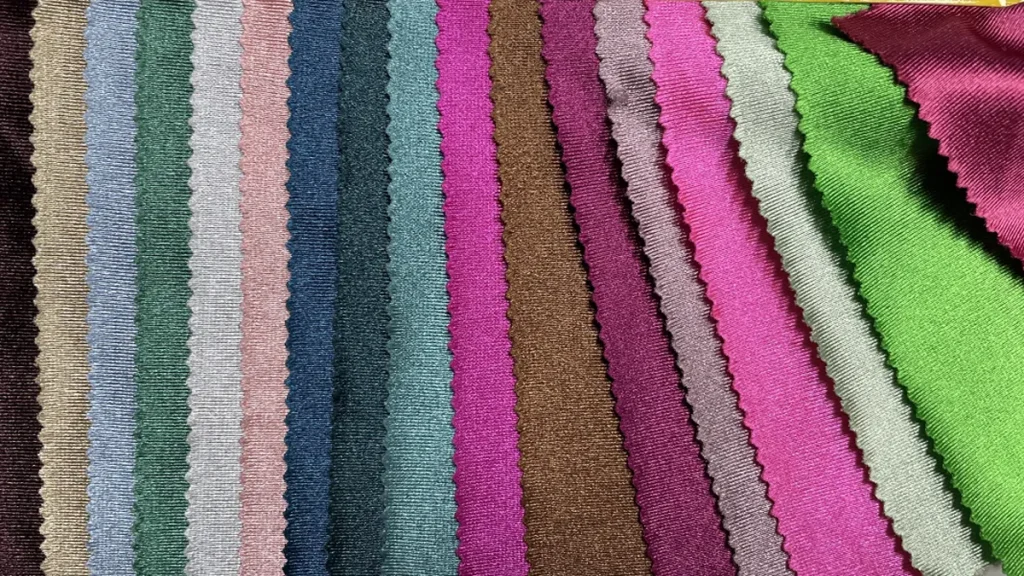
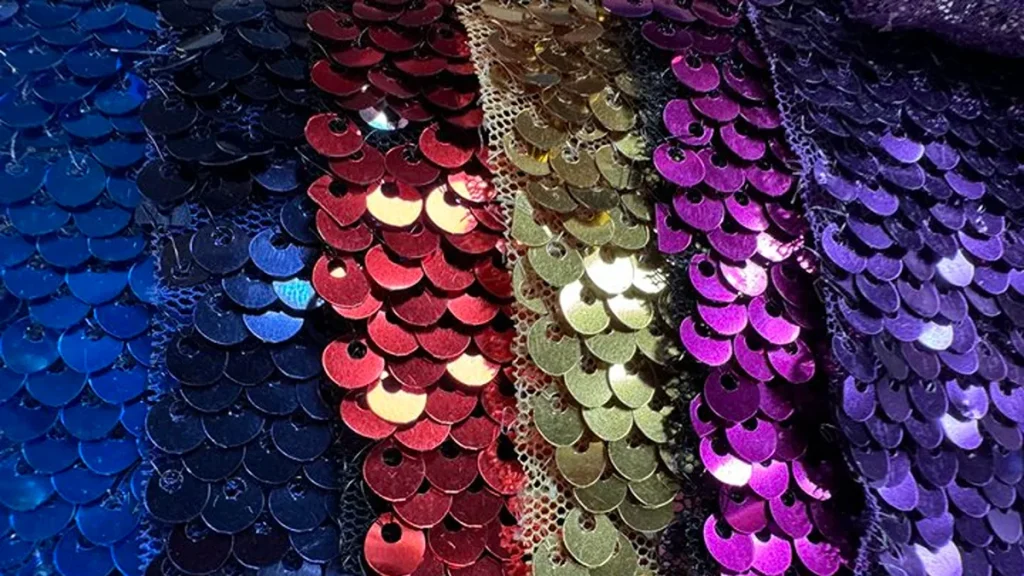
Nylon blends dominate high-performance swimwear by delivering superior stretch, hydrodynamics, and a second-skin fit. Success relies on matching the exact denier and elastane type to your specific aquatic environment.
Nylon/Elastane Tricot Blends
Standard tricot knits serve as the baseline for competitive suits. This warp-knit construction resists laddering and maintains structural stability under immense physical stress in the water.
- संघटन: Features a 75-80% नायलॉन और 20-25% elastane structure to ensure mandatory 4-way stretch.
- Tactile feedback: Provides an exceptional body-hugging fit with a highly requested soft hand feel.
- Primary application: Ideal for sprint and middle-distance racing suits that prioritize dynamic movement and hydrodynamics.
Nylon with Chlorine-Resistant Elastane
Standard elastane breaks down fast in chlorinated pools. Upgrading to specialized stretch fibers solves this chemical degradation issue without sacrificing nylon’s signature comfort and drape.
- Fiber integration: Integrates specialized spandex like XTRA LIFE LYCRA® to mitigate chemical degradation.
- Durability upgrade: Significantly extends suit lifespan against continuous exposure to chlorine, body oils, और सनस्क्रीन.
- Use case: Retains shape and elasticity longer, making it highly suitable for frequent pool training.
High-Compression Nylon Fabrics
Speed in the water requires strict muscle containment. High-compression textiles apply targeted pressure to specific muscle groups, keeping the swimmer’s body in a rigid, hydrodynamic position.
- Construction: Utilizes a dense, tight-gauge knit construction with 25-35% elastane for targeted muscle support.
- Hydrodynamic function: Helps streamline the swimmer’s silhouette and reduces muscle vibration to minimize drag.
- Target market: Essential for elite competition wear and performance-focused triathlon suits.
Microfiber Nylon (Fine Denier)
Chafing destroys performance during endurance events. Fine denier yarns eliminate skin friction by creating an incredibly dense, soft surface that glides smoothly through the water.
- Material structure: Manufactured using micro-denier filaments to create an ultra-smooth, second-skin texture.
- Performance edge: Enhances overall hydrodynamics while offering superior comfort during prolonged wear.
- के लिए सबसे उपयुक्त है: Open-water swimwear, long-distance events, and youth competition gear.
Nylon with Technical Surface Treatments
Raw nylon inherently absorbs more water than polyester. Textile engineers counteract this limitation at the elite level by applying advanced chemical finishes directly to the fabric surface.
- Water repellency: Incorporates hydrophobic coatings to repel water, keeping the fabric lightweight during swims.
- Durability enhancements: Features specialized micro-additives or anti-pilling finishes for added abrasion resistance.
- Strategic focus: Targeted specifically at elite-level racing where drag reduction and glide speed are top priorities.
High-Quality Custom Bikinis for Your Brand

Best Polyester Fabrics for Colorfast and Durable Swimwear
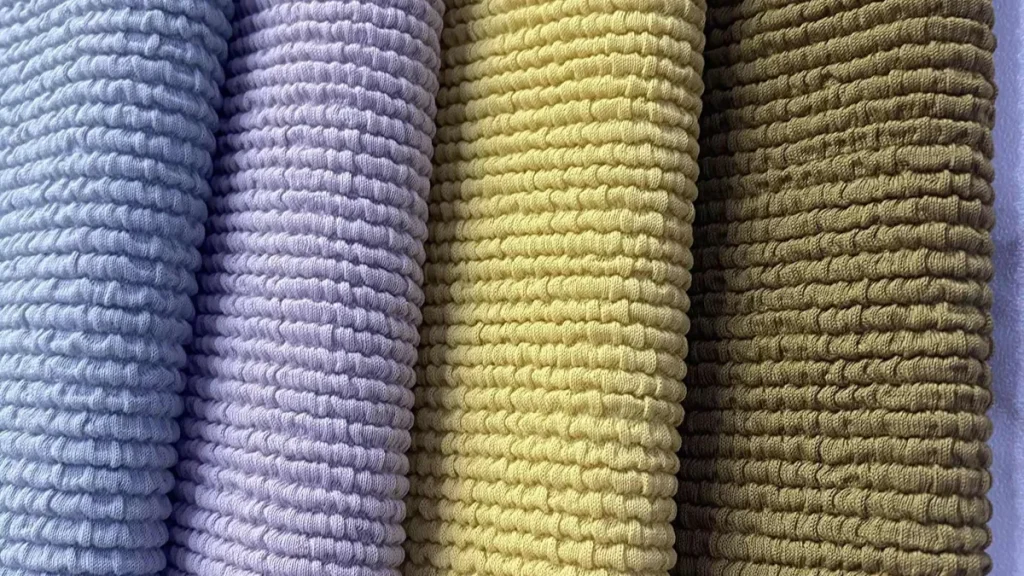
Polyester fabrics dictate performance in commercial swimwear lines by offering superior chlorine resistance, enduring colorfastness, and structural shape retention over thousands of pool hours.
Polyester and Elastane Warp Knit Tricot
Warp knit tricot structures form the backbone of commercial swimwear production. Manufacturers rely on this specific knit because it resists laddering and running, making it highly dependable on the factory floor and in the water.
- Typically composed of 80–90% polyester blended with 10–20% elastane.
- Features a smooth, tightly knit structure that provides high density and excellent shape retention.
- Functions as a strong base for sublimation printing, allowing colors and patterns to remain sharp.
- Highly suitable for fashion swimwear, athletic suits, and children’s swimwear requiring pilling resistance.
PBT/Polyester Blends (Polybutylene Terephthalate)
When swimwear faces daily exposure to harsh pool chemicals, standard elastane eventually breaks down. PBT blends solve this problem by generating stretch mechanically through the polymer structure itself, drastically reducing the need for vulnerable spandex yarns.
- Delivers exceptional chlorine resistance that often exceeds standard polyester capabilities.
- Provides strong elasticity and mechanical stretch without relying on high elastane percentages.
- Maintains a stable shape over an extended lifespan despite heavy exposure to chlorinated pools.
- Ideal for competition suits, water polo, lifeguard uniforms, and institutional swimwear.
पुनर्नवीनीकरण पॉलिएस्टर (rPET) कपड़े
Brands pushing eco-friendly initiatives no longer have to compromise on technical performance. Recycled polyester delivers the exact same physical properties as virgin polyester as long as the mill controls the knit density and yarn quality.
- Manufactured from post-consumer PET bottles or pre-consumer waste to support sustainable sourcing.
- Matches the colorfastness, टिकाऊपन, and stretch of virgin polyester when engineered with the same warp knit and GSM.
- Often supported by industry certifications such as the Global Recycled Standard (जीआरएस) और OEKO-TEX.
Polyester with High-Chlorine Resistant Elastane
Standard spandex degrades fast in high-use aquatic environments. By swapping basic elastane for specialized chlorine-resistant stretch fibers, manufacturers build a premium tier of swimwear that retains its compressive fit season after season.
- Integrates specialized stretch fibers like Xtra Life LYCRA®, Creora® HighClo™, or XLANCE® into the polyester base.
- Resists chlorine degradation up to 10 times better than standard elastane options.
- Prevents long-term bagging and sagging while defending colors against sunscreen and sweat fading.
- Targeted at premium swimwear brands prioritizing high-performance fit and structural longevity.
Eco-Friendly Fabrics Used in Swimwear Production
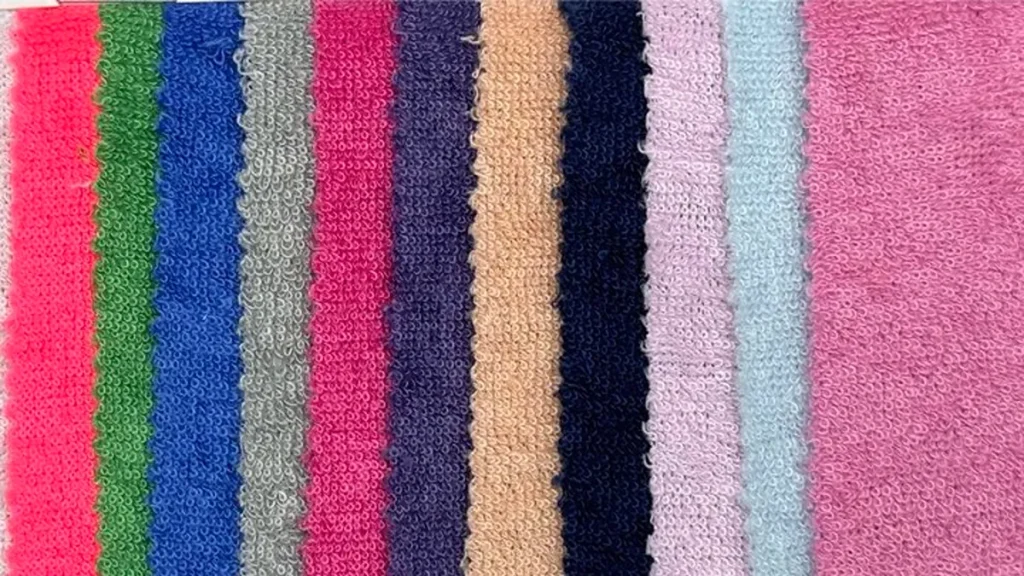
Recycled synthetics dominate eco-friendly swimwear production by matching virgin performance while diverting waste. Plant-based and biodegradable options serve niche markets, requiring strategic blends for functional elasticity.
High-Performance Recycled Synthetics
ECONYL® regenerated nylon diverts waste like discarded fishing nets from oceans and landfills. It delivers the excellent stretch, वसूली, and abrasion resistance required for high-quality swimwear construction.
REPREVE® and generic rPET (पुनर्नवीनीकरण पॉलिएस्टर) utilize post-consumer plastic bottles as their primary feedstock. These recycled polyesters provide strong colorfastness, making them highly effective for vibrant printed designs.
These recycled synthetics closely match virgin fiber performance. This functional parity makes them the dominant choice for active and competitive swimwear production where durability and shape retention are non-negotiable.
Natural and Plant-Based Fibers
Hemp requires minimal water and pesticides during cultivation. It offers high durability and natural UV protection, making it a viable component for eco-conscious beachwear.
Organic cotton and bamboo-derived fibers provide a distinctly soft hand-feel. Manufacturers typically reserve these materials for resort wear, hybrid apparel, and cover-ups rather than water-intensive performance suits.
Plant-based options generally absorb more water than synthetics and dry slower. They lack inherent elasticity, requiring elastane blends to achieve the necessary stretch for functional swimwear silhouettes.
Biodegradable Options and Circular Materials
Emerging biodegradable synthetics break down faster in specific anaerobic landfill environments. These engineered fibers reduce the long-term persistence of discarded garments at the end of their lifecycle.
Deadstock and upcycled materials repurpose surplus fabric rolls or marine debris. This sourcing strategy drastically reduces new resource consumption and prevents usable textiles from entering the waste stream.
Mono-material designs, such as 100% recycled polyester knits without elastane, facilitate mechanical recycling. While they sacrifice some multi-directional stretch, these single-fiber constructions support closed-loop manufacturing and true circularity.
Compression and Shaping Fabrics for Premium Swimwear
Premium compression fabrics blend high-density elastane and specialized knits to sculpt the body, reduce drag, and maintain structural integrity under harsh aquatic conditions.
Functional Roles in Shaping and Support
Shaping fabrics go beyond basic coverage to actively sculpt the body. Designers use these materials to smooth curves and apply targeted control to specific zones like the midsection and bust. To keep the garment locked in place, high-density knits stabilize the entire structure. This physical resistance prevents bagging or shifting during heavy movement. For active swimmers, compression serves a dual purpose: it reduces water drag and contains muscle vibration, which lowers overall fatigue in the pool.
Essential Performance Properties
A functional shaping swimsuit must perform in aggressive aquatic environments while maintaining its exact fit. Sourcing teams evaluate these textiles based on strict physical requirements:
- खिंचाव और पुनर्प्राप्ति: The fabric requires a minimum of 50% four-way stretch combined with immediate structural recovery to avoid sagging.
- Comfort balance: Manufacturers pair firm outer compression shells with soft, non-irritating inner linings to maximize skin comfort during prolonged wear.
- Environmental resistance: Long-term performance relies heavily on the fabric’s ability to withstand chlorine, नमक का पानी, UV degradation, and surface pilling.
Common Fiber Blends Used for Sculpting
Selecting the right base fiber determines how the compression behaves over time and aligns with the brand’s target market.
- Nylon-elastane: This combination delivers a luxurious, soft hand feel that suits fashion-forward shaping collections perfectly.
- Recycled polyester-elastane: This blend offers superior colorfastness against UV and chemicals while aligning closely with sustainable brand messaging.
- PBT (Polybutylene Terephthalate): Built for intense aquatic environments, PBT provides exceptional shape retention even under heavy chlorine exposure.
Specialized Constructions and Textures
Beyond the raw fiber, the actual knit construction dictates the physical compression level. Warp-knitted tricots and tightly woven circular jerseys establish the baseline firmness for the garment. Brands often incorporate surface textures to enhance this functionality. Ribbed and jacquard fabrics add mechanical grip that locks the suit to the body, while their visual patterns create a naturally slimming effect.
Internally, manufacturers deploy hidden power mesh inserts. These strategic panels apply targeted control to the abdomen or back without adding unnecessary bulk to the final silhouette.
Fabric Testing Standards for Swimwear Quality
Standardized testing separates high-performance swimwear from fast-fashion failures. Validating colorfastness, stretch recovery, and chemical resistance guarantees garments withstand harsh pool and saltwater environments.
Colorfastness and Environmental Resistance
Swimwear faces constant attacks from UV rays, पूल रसायन, और खारा पानी. To ensure dyes and prints survive these environments without degrading, testing facilities rely on targeted exposure protocols.
- AATCC 16 (रोशनी): Evaluates resistance to fading, yellowing, and degradation from intense UV exposure.
- AATCC 162 (क्लोरीन): Measures color retention and structural integrity after submersion in chlorinated pool water.
- ISO 105-E02: Tests structural stability and colorfastness in simulated saltwater environments.
Quality benchmarks typically require a grade 4 or better on the color change scale. This passing grade ensures minimal staining on adjacent fabrics and long-term visual appeal.
Stretch Recovery and Mechanical Strength
A swimsuit must hug the body without bagging or sagging after repeated use. Fabric engineers validate mechanical strength to confirm the material withstands the stress of donning, wringing, and active movement.
- Tensile Strength (आईएसओ 13934): Measures the sheer breaking force required to rupture the knit.
- Stretch Properties (ASTM D4964): Quantifies tension and elongation under dynamic stress.
- 4-Way Stretch Protocols: Tests both warp and weft elongation to validate shape retention for blends containing 15–20% spandex.
Testing labs apply repeated extension cycles to identify premature loss of elasticity. This process reveals if heat or chlorine exposure causes the modulus to break down before its expected lifespan.
Physical Durability and Opacity Validation
Rough pool decks, रेत, and constant friction destroy weak textiles. Beyond surface wear, the fabric must maintain modesty when stretched to its physical limit underwater.
- Abrasion Resistance (ASTM D3886): Rubs the fabric against abrasive surfaces to simulate contact with slides and pool edges.
- Opacity Evaluations: Verifies that fabrics meeting the standard 190–230 GSM range maintain full coverage when wet and fully stretched.
- Dimensional Stability (AATCC 135 / आईएसओ 5077): Measures shrinkage or growth after home laundering to guarantee long-term fit retention.
These tests confirm the garment will survive daily wear and standard wash cycles without thinning, pilling, or losing its original silhouette.
सुरक्षा, आराम, and Compliance Certifications
Buyers expect swimwear to feel comfortable against bare skin and comply with strict environmental standards. Manufacturers use specialized certifications and tactile tests to validate these exact requirements.
- OEKO-TEX® मानक 100: Confirms the textiles, dyes, and finishes contain zero harmful substances like heavy metals or phthalates.
- वैश्विक पुनर्नवीनीकरण मानक (जीआरएस): Verifies the chemical safety and responsible processing of recycled materials, including Econyl® and Repreve®.
- Sensory and Modulus Testing: Evaluates fabric stretch mechanics to balance supportive compression with extended skin comfort.
Meeting these compliance thresholds protects the end-user while backing up brand sustainability claims with hard data.
How to Choose the Right Fabric for Your Product Category
Fabric selection dictates product success. Match polyester for pool durability, nylon for fashion appeal, and precise spandex blends for essential stretch and recovery.
| उत्पाद श्रेणी | Recommended Fabric | Primary Benefit |
|---|---|---|
| पहनावा & विलासिता | Nylon-Spandex | Soft drape and premium feel |
| प्रदर्शन & बच्चे | Polyester Blends | Chlorine resistance and durability |
| Sustainable Lines | ECONYL® / REPREVE® | Eco-friendly with performance parity |
| लहर & Water Sports | Neoprene / Tech Fabrics | Structure and thermal insulation |
Matching Fabric Characteristics to End-Use
The environment where your product will be used dictates the baseline material you must select. Aligning fiber properties with actual consumer behavior prevents premature garment failure.
- High pool usage: Demands polyester-spandex to ensure long-term chlorine resistance and shape retention.
- Style-led and fashion applications: Favor nylon-spandex for a softer drape, subtle sheen, and premium hand feel.
- Sustainable collections: Require verified recycled options like ECONYL® or REPREVE® to maintain performance parity with virgin synthetics.
- Surf and water sports: Often necessitate neoprene or heavy technical fabrics for structure, thermal insulation, and high abrasion resistance.
Determining the Right Weight and Spandex Blend
Fabric weight and spandex ratio control the structural integrity and physical feel of the swimsuit. Lighter fabric weights suit fashion swimwear, offering enhanced flexibility and a softer touch. Heavier fabrics provide superior support and durability, making them ideal for competitive swimming or structured silhouettes.
You adjust compression directly through the spandex content. Higher spandex content increases thickness and compression, while lower spandex yields a thinner, softer garment. A balanced nylon-spandex or polyester-spandex blend delivers the necessary stretch for fit and recovery for shape retention.
Fabric Recommendations by Product Category
Choosing a material that fails to meet a category’s core function will result in poor reviews and high return rates. Base your sourcing on exact product line requirements.
- Fashion and luxury lines: Prioritize premium nylon-spandex for maximum visual appeal and comfort.
- Performance and kids’ तैराकी पोशाक: Rely on polyester blends for superior durability against repeated washing and pool chemicals.
- Budget-friendly collections: Utilize standard synthetic blends to achieve reliable baseline stretch and cost efficiency.
- Decorative pieces and overlays: Often incorporate specialty meshes or textured knits to create visual differentiation.
Essential Performance Checklist for Final Selection
Before moving into थोक उत्पादन, run potential fabric swatches through a strict validation process. Confirming these variables guarantees the end product functions correctly in active conditions.
- खिंचाव और पुनर्प्राप्ति: Verify the fabric returns to shape to ensure the garment does not sag or bag when wet.
- रंग स्थिरता: Evaluate dye stability against UV rays, क्लोरीन, and saltwater exposure.
- Opacity: Confirm acceptable coverage levels when the fabric is fully stretched on the body.
- नमी प्रबंधन: Review quick-dry capabilities to prevent the swimwear from retaining excess water.
अक्सर पूछे जाने वाले प्रश्नों
What fabric lasts the longest for swimwear?
Polyester and elastane blends—specifically warp knits in the 180–220 gsm range—deliver the best longevity. These blends naturally resist chlorine degradation, UV radiation, and color fading better than standard nylon. Manufacturers rely on this combination as the baseline for performance suits, training gear, and any product designed for heavy pool use.
Which fabrics provide the best stretch and recovery?
Nylon and spandex blends hit the highest marks for comfortable, 4-रास्ता खिंचाव. We typically look for an 80–90% nylon and 10–20% spandex ratio. To prevent bagging and sagging after repeated wear, a commercial swimwear fabric requires at least 50% stretch in both horizontal and vertical directions, backed by immediate recovery.
How do eco-friendly fabrics compare to traditional performance fabrics?
Premium recycled synthetics like ECONYL (regenerated nylon) and REPREVE (पुनर्नवीनीकरण पॉलिएस्टर) match virgin fabrics molecule for molecule in stretch, टिकाऊपन, और क्लोरीन प्रतिरोध. They deliver equivalent performance while actively reducing environmental impact. You should avoid natural eco-fibers like cotton or bamboo for functional swimwear, as they absorb heavy amounts of water and fail to recover their shape.
Why do swimsuits fade and how can manufacturers prevent it?
क्लोरीन, UV radiation, नमक का पानी, and heat constantly attack and break down dye molecules. You can combat this fading by prioritizing polyester-spandex blends over basic nylon for pool-heavy collections. Specify high-colorfast solution dyes during sourcing and require your mills to apply specialized UV and chlorine-resistant finishes to the final yardage.
What is the ideal fabric thickness for swimwear manufacturing?
The reliable industry standard for versatile, commercial swimwear sits between 200 और 250 जीएसएम. You can drop down to 180–210 gsm for minimal fashion bikinis where a softer drape matters more than support. For shaping suits, दरारों से रक्षा, or any garment requiring strong compression and structure, you need heavier fabrics in the 250–300 gsm range to prevent opacity issues when wet.