Vai al contenuto

For swimwear brands, UPF performance is more than a fabric specification. The fabric must continue to provide reliable UV protection while the garment is stretched, wet, washed, and exposed to sunlight. This is especially important for rash guards, swim leggings, long-sleeve swimsuits, and children’s swimwear designed for extended outdoor use.
In UPF swimwear manufacturing, the final level of UV protection depends on several factors working together: fiber type, yarn construction, densità del tessuto, colore, stirata, finishing, and testing. A high-UPF claim should therefore be supported by testing of the actual fabric or finished garment.
This guide explains how swimwear manufacturers engineer UV protection fabric for costumi da bagno, how wetness and stretching affect UPF performance, which testing methods are commonly used, and what brands should consider when developing custom UPF 50+ costumi da bagno.
What Is UPF in Swimwear?
UPF stands for Ultraviolet Protection Factor. It measures how effectively a textile reduces the amount of ultraviolet radiation transmitted through the fabric to the skin. Unlike SPF, which is primarily used to describe sunscreen performance, UPF is a rating for textiles.
For swimwear brands, UPF should be treated as a fabric and garment performance specification. The rating depends on the finished textile construction and test conditions, not simply on whether the fabric contains polyester, nylon, or another synthetic fiber.
UPF vs. SPF
UPF describes the UV protection provided by a textile, while SPF describes the sun protection factor of sunscreen products. UPF-rated clothing provides physical coverage wherever the fabric covers the skin, while sunscreen is applied directly to exposed skin.
For swimwear brands, UPF protection can be incorporated into products such as rash guards, swim shirts, ghette, costumi da bagno interi, and children’s UV swimwear. Tuttavia, uncovered areas of skin still require appropriate sun protection.
What Does UPF 50+ Mean?
A UPF 50 rating means the fabric allows no more than approximately 1/50 of erythemally weighted UV radiation to pass through under the applicable test conditions. That corresponds to about 98% UV blocking.
UPF 50+ is therefore a common target for sun-protective swimwear, particularly for children’s products, guardie avventate, and garments intended for prolonged outdoor activities. Brands should still verify the exact rating and applicable labeling requirements for their target market.
What Makes a Fabric Suitable for UPF Swimwear Manufacturing?
High UPF performance does not come from one material feature. Manufacturers normally combine fiber selection, yarn construction, densità del tessuto, tintura, finishing, and garment engineering to create a stable UV protection fabric for swimwear.
Fiber Type and Yarn Construction
Synthetic fibers such as polyester and nylon are widely used in swimwear because they offer good durability, dimensional stability, and resistance to repeated exposure to water and sunlight. Tuttavia, fiber type alone does not determine the final UPF rating.
- Poliestere: Commonly selected for its durability, dimensional stability, solidità del colore, and suitable UV performance.
- Nylon: Provides a soft hand feel and strong stretch performance, making it useful for many swimwear constructions.
- Microfilament yarns: Can create a more compact fabric structure and help reduce openings through which UV radiation can pass.
- Solution-dyed yarns: Color is introduced during fiber production, which can improve colorfastness and may contribute to UV performance depending on the formulation.
Fabric Density and Cover Factor
Fabric construction is one of the most important factors affecting UV transmission. A dense textile leaves fewer and smaller openings between yarns, reducing the amount of radiation that can pass through the material.
For swimwear, manufacturers need to balance density with stretch, traspirabilità, peso, drying speed, e conforto. Increasing fabric density can improve coverage, but an excessively heavy construction may not be suitable for active swimwear.
Peso del tessuto
Fabric weight is another useful development parameter, but there is no universal GSM value that automatically guarantees UPF 50+. A 180–250 g/m² range may be suitable for some structured swimwear fabrics, but the actual UPF result depends on the complete textile construction.
For this reason, brands should avoid selecting a fabric based on GSM alone. The final fabric should be tested after the required dyeing, finishing, and construction processes.
How Stretch and Wetness Affect UPF Performance
A fabric that performs well in a new, dry condition may not deliver the same result after stretching or wetting. This is why realistic test conditions are particularly important when developing UPF swimwear.
Stretching Opens the Fabric Structure
When a knitted fabric is stretched, the distance between yarns can increase and the openings within the structure can become larger. As a result, more UV radiation may pass through the fabric.
This is especially important for tight-fitting swimwear, compression-style rash guards, and leggings. A fabric should therefore be evaluated at an appropriate stretch level rather than tested only in its relaxed condition.
Wet Fabric Can Have Different UV Performance
Water can change the optical properties of a textile and reduce the difference between the refractive index of air and the fibers. This can affect the amount of UV radiation transmitted through the fabric.
For swimwear, wet-state performance is therefore an important development consideration. A laboratory test method such as AATCC TM183 can evaluate fabrics in either dry or wet condition, while UV STANDARD 801 includes wet and stretched conditions within its clothing testing program.
Why Elastane Content Matters
Elastane is essential for many swimwear designs because it provides stretch and recovery. Tuttavia, excessive extension can open the textile structure and reduce UV protection during wear.
Instead of applying one fixed elastane percentage to every UPF fabric, manufacturers should select the blend according to the garment’s intended fit, stretch requirement, costruzione in tessuto, and test target. The finished material should then be tested under the expected conditions of use.
UV Protection Fabric Technologies for Swimwear
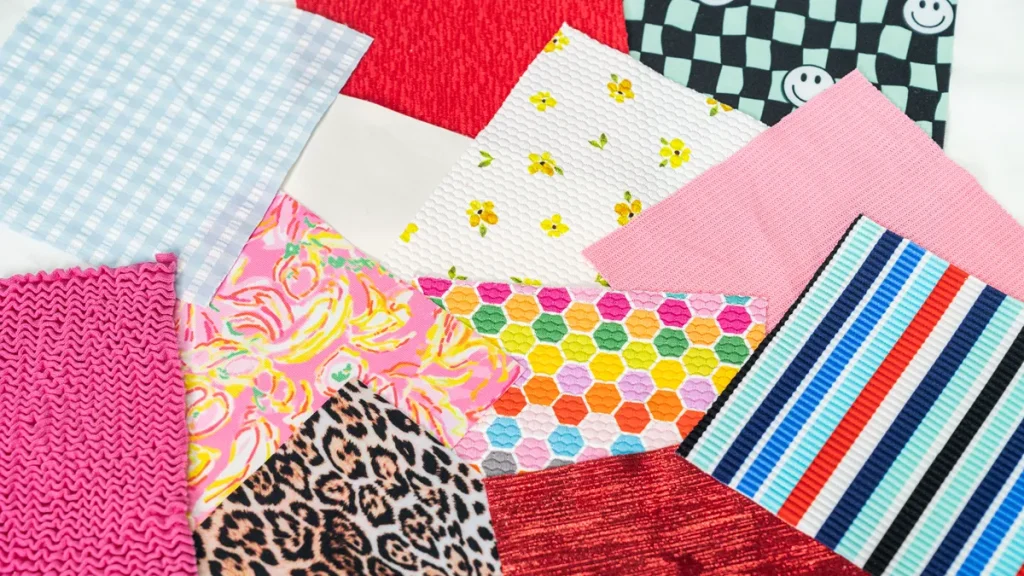
There are several ways to improve the UV performance of swimwear fabrics. The most suitable approach depends on the fiber, colore, costruzione in tessuto, durability target, and production process.
Solution-Dyed and Dope-Dyed Fibers
In solution dyeing, pigments or colorants are incorporated into the polymer before the synthetic fiber is formed. Because the color is integrated into the fiber rather than applied only to the finished fabric surface, this process can provide strong colorfastness and reduce the need for some downstream dyeing processes.
Per swimwear brands developing products for frequent outdoor use, solution-dyed yarns can be considered when colorfastness, durabilità, and consistent performance are key requirements.
UV-Absorbing and UV-Stabilizing Additives
Some synthetic fibers and textile formulations use UV absorbers or stabilizers to improve resistance to ultraviolet radiation. These additives can be incorporated during fiber production or applied during textile finishing, depending on the material and manufacturing process.
The durability of a surface-applied finish depends on the chemistry, fixation process, costruzione in tessuto, and care conditions. Therefore, brands should verify wash durability and actual UPF performance through laboratory testing rather than assuming that a particular finish automatically provides permanent protection.
Dense Knit Structures
Fabric construction is often as important as chemical treatment. Compact knit structures can reduce the size and number of openings in the textile, helping limit UV transmission.
- Interlock: Provides a compact double-knit structure and can offer good dimensional stability.
- Tricot: A warp-knit structure commonly used when smooth surfaces and dimensional stability are required.
- Raschel: Can be engineered for different levels of openness, stirata, and coverage depending on the design.
- Mesh: Provides ventilation but can reduce UV protection because of its intentionally open structure.
Dope-Dyed vs. Chemical UV Protection for Swimwear
When developing UV protection fabric for swimwear, brands may consider both fiber-level technologies and post-production finishing. The right option depends on the product specification and manufacturing route. Factor Dope-Dyed / Solution-Dyed Chemical Finish Application stage During synthetic fiber production During textile finishing Solidità del colore Generally strong Depends on dye and finishing system UV performance Can provide intrinsic performance depending on fiber formulation Depends on finish durability and fabric construction Design flexibility Best planned early in material development Can be applied to selected existing fabric constructions Best use Long-term outdoor and performance apparel Specific fabric and finishing requirements
Neither method should be treated as a substitute for testing. The final UPF rating depends on the complete fabric system, including fiber, yarn, knit structure, colore, finishing, e allungare.
How Color Affects UPF 50+ Costumi da bagno
Color can influence UV transmission because dyes and pigments interact with ultraviolet radiation. In many fabric constructions, darker and more saturated colors provide greater UV absorption than very light shades.
Tuttavia, brands should not assume that a dark color automatically qualifies as UPF 50+. Bianco, pastello, and bright fabrics can also be engineered for high UPF performance through appropriate yarn selection, densità del tessuto, finishing, e costruzione.
When developing a multi-color swimwear collection, testing should be planned carefully because different colors or printed areas may have different UV transmission characteristics.
UPF Testing Standards for Swimwear
A UPF claim should be supported by an appropriate laboratory test. Different standards and test programs use different procedures and conditions, so brands should select the method according to their target market and product claims.
AATCC TM183
AATCC TM183 is a test method for determining the transmittance or blocking of erythemally weighted ultraviolet radiation through textile fabrics. The method uses spectrophotometric or spectroradiometric measurement and can evaluate specimens in either dry or wet condition.
Per produttori di costumi da bagno supplying the US market, AATCC TM183 can be an important part of the fabric performance verification process. Product labeling and specifications may involve additional ASTM requirements, so brands should confirm the complete compliance pathway for their product.
UV STANDARD 801
UV STANDARD 801 is designed to evaluate UV protection under more realistic conditions of use. Its clothing testing program can include new, stretched, wet, abraded, and washed conditions. The final result is based on the applicable testing program and the measured performance under those conditions.
This makes UV STANDARD 801 particularly relevant when a brand wants to understand how UV protection may change during actual wear rather than relying only on a new, dry fabric condition.
AS/NZS 4399
AS/NZS 4399 is widely associated with sun-protective clothing in Australia and New Zealand. Brands targeting these markets should confirm the current edition and applicable labeling requirements with their testing laboratory before making a UPF claim.
EN 13758 and EU Requirements
European UV-protective clothing requirements should be assessed according to the specific product claim and applicable regulations. Where a garment is marketed as UV-protective clothing within the scope of the EU PPE framework, additional conformity and CE-marking requirements may apply.
Manufacturers should therefore avoid treating a single UPF test report as universal regulatory approval for every market. Testing and labeling requirements should be confirmed based on the destination country and product category.
How to Manufacture UPF 50+ Swimwear for Your Brand
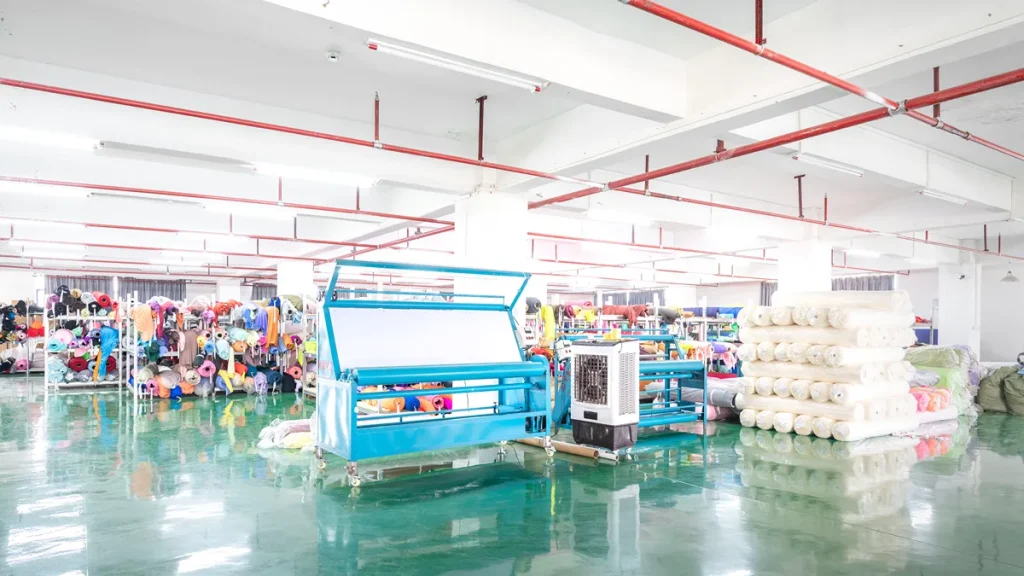
Start With the Right Fabric Specification
The fabric specification should match the intended product. A lightweight children’s rash guard may require a different construction from a high-stretch fashion swimsuit. Similarly, a long-sleeve UV shirt designed for surfing may require different chlorine, acqua salata, abrasion, and recovery performance than resort swimwear.
For this reason, an experienced UPF swimwear manufacturer should evaluate fabric performance together with garment design rather than treating the fabric as an isolated component.
Test the Final Material and Garment
Testing should be planned around the claim that the brand intends to make. If the product is designed for swimming, wet-state performance can be particularly important. If it is a fitted garment, stretch should also be considered.
UV STANDARD 801 is one example of a testing program that considers several use and ageing conditions, including stretching, wetting, abrasion, and washing.
Control Production Consistency
A successful UPF swimwear program requires more than one good laboratory sample. Bulk production should control fabric composition, GSM, colore, stirata, recupero, tintura, finishing, taglio, and sewing processes to maintain consistent product quality.
Per private label and OEM swimwear brands, this is especially important when the same fabric is used across multiple colors and garment styles. Pre-production approval, material inspection, and appropriate quality control can help reduce variation between samples and bulk orders.
UPF Swimwear Manufacturing: Key Factors to Check
- Composizione del tessuto: Choose fibers and yarns that match the required stretch, durabilità, and UV performance.
- Fabric construction: Check density, GSM, knit structure, and openness instead of relying on fiber type alone.
- Stretch performance: Evaluate UPF performance when the fabric is stretched to its intended wearing condition.
- Wet-state performance: Consider how the material performs when wet, especially for swimwear and rash guards.
- Colore: Test colors and prints appropriately because UV transmission can vary between shades.
- Durabilità: Consider washing, abrasion, cloro, acqua salata, and sunlight exposure when developing the product.
- Test: Select a test method that supports the intended product claim and target market.
Considerazioni finali: Building Reliable UPF Swimwear
Reliable UPF swimwear starts with the complete product system rather than one fabric specification. Fiber selection, yarn construction, densità del tessuto, colore, finishing, stirata, umidità, garment design, and testing all influence the final UV protection performance.
For brands developing custom UPF 50+ costumi da bagno, working with an experienced swimwear manufacturer can help connect fabric development with garment construction and production requirements. Testing should be planned around the actual use conditions and target market so that the final product can support its intended UV protection claim.
Abbigliamento MLY provides OEM and private label swimwear manufacturing services for brands developing custom bikinis, guardie avventate, swimwear sets, and other performance-focused products. If you are developing a new UPF swimwear collection, contact our team to discuss fabric options, custom development, campionamento, e produzione in serie.
Frequently Asked Questions About UPF Swimwear
What fabric is best for UPF 50+ costumi da bagno?
There is no single fabric that automatically qualifies as UPF 50+. Polyester and nylon are widely used for UV-protective swimwear, but the final UPF rating also depends on fabric density, yarn construction, colore, stirata, finishing, and testing conditions. A suitable fabric should be selected and tested according to the intended garment and market.
Can UPF swimwear lose protection when wet?
SÌ. Wetness can change the optical properties of textile materials and may affect UV transmission. The extent of the change depends on the fabric construction and material. For swimwear, wet-state testing can provide a more realistic understanding of performance.
Does stretching reduce UPF?
Stretching can reduce UV protection when it increases the openings between yarns. This is particularly important for tight-fitting swimwear. A fabric designed for UPF protection should be evaluated at an appropriate stretch condition when the garment is intended to be worn close to the body.
Is UPF 50+ good for swimwear?
UPF 50+ is a high level of textile UV protection and is a common target for sun-protective swimwear. It is particularly useful for products such as rash guards, swim shirts, children’s swimwear, and other garments designed for extended outdoor exposure. The actual claim should be supported by appropriate laboratory testing.
Does color affect UPF?
SÌ. Colorants can affect how much UV radiation a textile absorbs or transmits. Darker or more saturated colors often provide better UV absorption than very light colors, but color alone does not guarantee UPF 50+. Fabric construction, yarn type, density, and finishing also affect the final result.
How is UPF tested for swimwear?
UPF is determined by measuring the amount of UV radiation transmitted through a textile and calculating its ultraviolet protection factor. AATCC TM183 is one recognized test method and can evaluate specimens in dry or wet condition. UV STANDARD 801 goes further by including conditions such as stretching, wetting, abrasion, and washing in its clothing testing program. The appropriate method depends on the target market and product claim.