콘텐츠로 건너뛰기


Swimwear Quality Control & 인증
Understand the checks behind a reliable swimwear order—from incoming fabrics and stitching to size consistency, testing and certification documents.
이 페이지에서
Start with the approved product
Before discussing inspections, identify what is being inspected. A one-piece swimsuit with a built-in support panel is not judged against the same construction details as a pair of swim trunks or a lightweight beach cover-up. The reference should be the approved sample and specification version for that particular style, including the selected fabric, 인쇄, 트림, labeling and packing instructions.
스타일, 컬러나 인쇄, 크기, material codes and sample version.
Agreed dimensions, 건설, appearance and functional checks.
측정, inspection results, photos, and the relevant material or test documents.
The most useful question is not simply “Do you have quality control?” It is “What will be checked on this 스타일, against which approved reference, and how will any differences be documented?”
Quality checks at three stages
MLY에서, quality control is woven directly into every step of our workshop: raw fabric 4-point inspection before spreading, in-line tension and stitch checking during sewing, 그리고 100% metal/needle detection before final bagging.
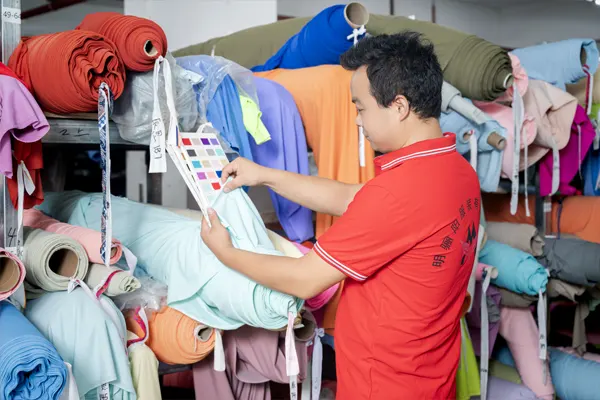
Fabric and trim checks before production
Check fabric appearance, 색상 일관성, stretch or recovery as relevant, shrinkage concerns, lining and component identity. Record the actual material code and batch where available.
Build the inspection plan around the actual garment. 예를 들어, patterned fabrics make alignment more visible; soft elastic edges deserve a fit and recovery check; and detachable hardware needs its own attachment review. The evidence should remain traceable to the style, size and sample version.
What to inspect on a swimsuit
Appearance alone is not enough. Swimwear must also be checked for fit, 뻗기, seams and the details that touch the wearer’s skin. A useful inspection checklist looks at the garment as a system rather than treating fabric, construction and labeling as unrelated items.
Fabric response
늘이는 방향, 회복, distortion and opacity in the relevant dry, wet or stretched state.
솔기 & 가장자리
Seam appearance, skipped stitches, loose threads, elastic application and comfort at leg openings.
Placement & symmetry
Panel alignment, print registration, strap position, left/right symmetry and trim placement.
Product details
라벨, care information, closures, padding where specified, hygiene liners and approved packaging.
A check only becomes useful once its acceptance condition is clear. “Good stretch” or “neat stitching” is too broad for resolving a disagreement. Record the test or observation, the agreed reference and the result. For material decisions, 참조 직물, 인쇄물 & Materials guide.
Measure against the approved size specification
Points of Measure (포엠) define where and how a garment is measured. Each relevant point needs a clear diagram, a measurement method, an approved value for the size, and an agreed tolerance. The same nominal number can lead to different results if one person measures a garment laid flat and another measures it while stretched.
Illustrative measurement locations — not a universal swimsuit standard
Example measurement map
- A · Upper-body width
- Specify exactly where the width is taken and whether the garment is relaxed.
- B · Waist width
- Define the reference level and flat or circumference measurement.
- C · Hip or seat width
- State where to measure relative to the garment’s side seam.
- D · Vertical flat length
- Define the exact top and bottom points with the swimsuit laid flat. This straight reference is not a torso-girth measurement; that needs a separate path and method.
| 포엠 | Approved size / value | Agreed tolerance | Actual reading | 검토 |
|---|---|---|---|---|
| Waist width, relaxed | From approved spec | From approved spec | Record result | 비교하다 & sign off |
| Vertical flat length | From approved spec | From approved spec | Record result | 비교하다 & sign off |
Swipe sideways to read all measurement columns →
원피스의 경우, a torso-girth or body-loop measurement follows a different path around the body or garment. Specify that method separately rather than using the straight D dimension above as a substitute.
There is no single tolerance suitable for every size, component and construction. The approved specification must define what is acceptable. Sample development and grading decisions are explained in the 견본 추출 & Product Development guide.
Connect performance tests to real use
A performance label is meaningful only when the product and test conditions are defined. Testing a fabric swatch does not automatically establish that every finished garment made from a similar fabric has the same performance. Agree whether the requirement concerns a material, a finished style, a colorway, or a particular shipment.
색 견뢰도
Confirm what exposure matters: 세탁, rubbing, pool water or another use condition. 어떤 재료인지 물어보세요, shade and method were tested.
Result + 방법 + sample identity뻗기 & 회복
Observe extension, recovery and deformation after use. Test direction and repeat cycles matter to the interpretation.
Direction + condition + criteriaDimensional change
Check relevant wash or care conditions and compare measurements before and after testing.
Care method + readings + thresholdSun-protection / UPF
For a UPF claim, match the test to the fabric or finished product, method and intended market; consider wet or stretched conditions where relevant.
Scope + 방법 + supporting reportThe exact test program depends on the product. For children’s swimwear, skin-contact materials and destination-market requirements may add checks beyond those of a fashion swimsuit. MLY의 지속 가능성 page discusses fabric options and coordinated third-party testing, but individual orders still require document and scope confirmation.
From a product claim to supporting evidence
Statements such as “recycled,” “UPF 50+” and “tested for harmful substances” refer to different kinds of claims. They should not be supported by the same generic badge. The buyer’s task is to connect each claim to the exact material or product and then to the relevant evidence.
What is being said?
예를 들어: recycled-content swimwear fabric.
Which material or style?
Identify material code, blend, supplier and order or sample.
Which record supports it?
Check certificate scope, validity, and any relevant transaction or test document.
Match the claim to the right record
Recycled-content fabric
Claim: a selected nylon blend contains certified recycled content.
- 식별하다
- 패브릭 코드, supplier and certified organization.
- 검토
- Relevant GRS scope plus shipment-specific transaction evidence where required.
Harmful-substance certification
Claim: a textile or finished article is OEKO-TEX® STANDARD 100 certified.
- 식별하다
- Exact article, components and claimed product class.
- 검토
- Valid label/certificate identifier and its covered product scope.
UPF 50+ 보호
Claim: a selected material or product provides a stated UV protection level.
- 식별하다
- Tested fabric or garment, color and applicable conditions.
- 검토
- Test method, results and sample identity appropriate to the claim.
These are examples of document matching, not certificates or test results issued for an MLY order.
A claim about a supplier’s material does not automatically cover all styles produced by a garment factory. Conversely, an inspection record for a finished garment does not replace supply-chain evidence for a recycled-content claim. Each record has its own purpose.
Understand different certification and audit documents
Material certification, harmful-substance testing, facility audits and quality management systems answer different questions. They are not interchangeable, and one certification mark cannot be used to imply all of these properties. The examples below explain how a buyer can read each type of document.
GRS / recycled-content documentation
The Global Recycled Standard relates to certified recycled-material content and chain-of-custody conditions. A Scope Certificate identifies what a certified organization is authorized to produce; a Transaction Certificate links certified products to a particular commercial transaction when applicable.
For a certification or test requirement, request the document covering your selected fabric or product and check its holder, scope and validity. OEKO-TEX Label Check allows number verification, while 섬유교류 explains Scope and Transaction Certificates.
How to review a certificate or test report
A clear-looking scan is not enough to establish coverage. Compare the document with the actual item you want to produce. The fields below apply in different combinations depending on whether you are reviewing a material certificate, product test report or factory audit.
Match five things
- Who: named legal entity or tested party.
- What: exact fabric, 제품, facility or process included.
- How: 기준, test method or audit scheme.
- When: issue date, validity and testing period.
- Which order: whether a transaction, batch or sample must also be matched.
For performance claims, also check the laboratory, method edition, tested condition and reported result. For textile certification, verify the identifier against the issuer’s available validation system rather than relying solely on a logo in a supplier presentation.
Plan checks for your product and destination
Different product concepts lead to different evidence needs. Discuss the intended market early, but do not treat a list of international standards as proof that one product automatically satisfies every jurisdiction’s requirements.
맞다, seam quality, 불투명, care performance, print alignment and approved component details.
편안, contact materials, trims and any applicable product or market-specific testing.
UPF evidence, material or garment coverage and the test conditions behind the claim.
Certified material scope, chain-of-custody information and correct product-level claim wording.
When a retailer or your destination market requires specific compliance testing (such as REACH, CPSIA, or Prop 65), let our team know upfront. While our mills carry OEKO-TEX® and GRS certifications, we regularly coordinate third-party lab testing through SGS or Intertek tailored to your market’s exact standards.
Record issues and close them with evidence
When a sample or finished order differs from the agreed specification, document the issue precisely: affected style, size or lot; the reference requirement; photos or measurements; proposed action; and the result after rechecking.
Keep the issue traceable
스타일, size or batch, affected part, clear photos and measurements.
Approved sample or specification version, plus agreed acceptance rule.
Document the responsible party and whether correction or remake is appropriate.
Record the result, confirmation and remaining open items.
This illustrates a documentation method, not an actual MLY complaint or a prescribed acceptance threshold.
We stand firmly behind our workmanship. If any delivered pieces contain manufacturing defects caused by our workshop, simply document them with clear photos and order IDs; our team will verify the issue and arrange a complimentary remake or agreed credit on your account.
Prepare your quality review brief
Use this checklist before a material approval, sample sign-off or bulk-order review. It is a preparation tool, not a substitute for a formal inspection agreement or a test report.
For a detailed product-development record, 보다 견본 추출 & 제품 개발. When the review is complete, carry the approved version, required documents and inspection criteria into the purchase order; 그만큼 주문 & Shipping guide is coming next.
자주 묻는 질문
What does MLY check during swimwear production?
Its Manufacturing page describes checks at incoming-material, in-process and finished-garment stages. The exact inspection plan for an order should be matched to the approved style, 구조, size specifications and any agreed tests.
Does a recycled-fabric certificate cover every finished swimsuit?
꼭 그런 것은 아니다. Check the certified organization and material scope, the chain-of-custody requirements, and the applicable order-level evidence. A material claim should not be extended to unrelated products or shipments.
How are acceptable measurement tolerances decided?
Use the style-specific approved specification. Identify each measurement point and method, then agree an appropriate tolerance for that construction and size. A single value should not be assumed for every measurement.
Is amfori BSCI a product certification?
아니요. amfori BSCI concerns a facility’s social audit and improvement process. It does not certify swimsuit materials, 맞다, UV protection or finished-garment quality.
What should I request for a UPF or children’s swimwear project?
Identify the destination market and exact product requirements first. Then confirm relevant fabrics, test methods, sample scope, applicable documentation and who will arrange testing. Do not assume that one fabric test covers all finished styles.
Make the quality requirements part of your brief
Tell MLY which styles you are developing, your target market, the inspection points you care about, and any certification or testing documents you need reviewed. This gives the team a specific basis for discussing materials, samples and production.
Discuss Your RequirementsProduct-specific test and document availability will be confirmed for the selected material and order.
MLY에 직접 연락하는 것을 선호합니다.? 사용 연락처 페이지.